
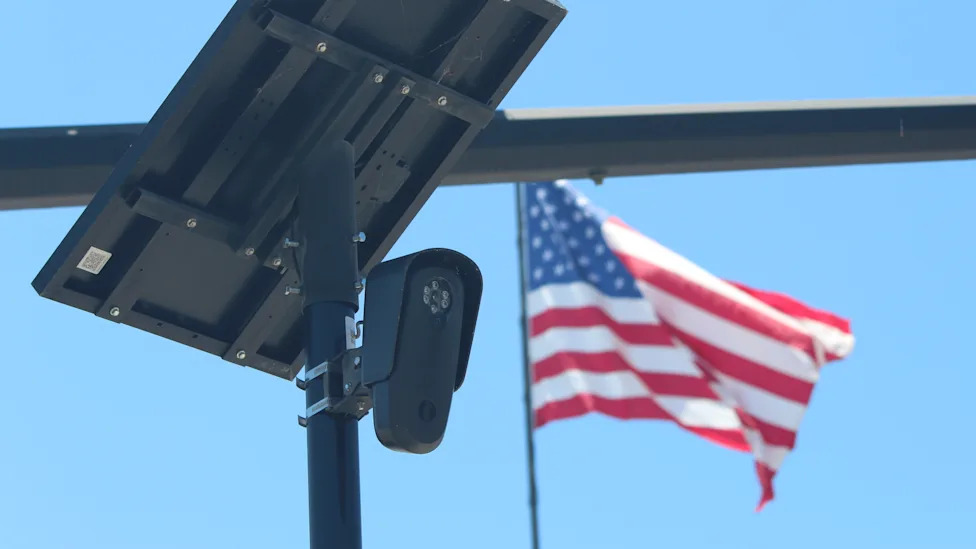
Law enforcement agencies across Ohio’s Miami Valley are actively investigating multiple incidents of property destruction targeting automated license plate reader technology. The physical attacks on these devices come amid an escalating public debate regarding citizen privacy, governmental surveillance reach, and the operational oversight of police technology. As local authorities work to track down those responsible for the vandalism, the incidents have brought renewed attention to the broader policy questions surrounding automated tracking systems across the state.
The Fairborn Police Department is currently spearheading inquiries into several recent cases of damaged surveillance infrastructure in the region. Investigators are attempting to identify the individuals responsible for intentionally disabling automated camera units that monitor vehicular traffic and capture license plate data on public roadways. The deliberate nature of these acts suggests a growing friction between local installations of monitoring technology and community pushback.
Among the specific sites targeted in recent days was an installation in the city of Riverside, where a license plate camera had been established within a military housing neighborhood. Perpetrators forcefully ripped the specialized recording unit directly from its mounting post, leaving the sensitive electrical hardware dangling by exposed internal wiring. The destruction effectively rendered the unit inoperable for neighborhood monitoring.
Shortly after the Riverside incident, investigators documented a second act of targeted property destruction roughly ten minutes away along Kauffmann Road. In that instance, the surveillance equipment was intentionally defaced with spray paint to obstruct the lens and sensor housing. Furthermore, the perpetrators left behind a clear political statement, scrawling the phrase "No Flock" directly onto the structural pole supporting the system.
The wave of deliberate property destruction has drawn sharp criticism from local residents who question the methods used by opponents of the technology. Riverside resident David Lutzweit publicly condemned the acts, pointing out that engaging in criminal property damage is completely counterproductive to meaningful civic dialogue. He emphasized that destroying municipal or contracted infrastructure fails to resolve the underlying public policy disagreements that surround surveillance systems.
Lutzweit stressed that community members harboring valid objections to electronic monitoring should utilize institutional democratic avenues rather than resorting to unlawful actions. He noted that individuals who disagree with surveillance policies have the option to attend local municipal council meetings and voice their grievances directly to elected representatives. Engaging civic leaders through open forums remains the appropriate legal avenue for challenging local administrative decisions.
Beyond criticizing the illicit destruction of the hardware, Lutzweit also articulated support for the tactical advantages that automated license plate readers offer to local police forces. In his view, automated detection systems serve as vital investigative assets that allow patrol units and detectives to solve crimes that might otherwise remain unresolved. For many neighborhood residents, providing law enforcement with reliable automated tools represents a crucial measure for safeguarding community well-being.
Statewide officials have also continued to champion the operational efficacy of the technology in critical emergency scenarios. During a law enforcement symposium held in Dayton, Ohio Attorney General Andy Wilson highlighted the tangible safety dividends generated by the automated network. He referenced a notable emergency intervention in Miami County where the real-time location capabilities of the camera system enabled first responders to swiftly find and rescue a suicidal individual in distress.
The broader technological footprint of Flock Safety has expanded dramatically nationwide in recent years. The company’s automated license plate recognition cameras have been established across more than 6,000 distinct communities, establishing an operational presence in every U.S. state with the sole exception of Alaska. However, this sweeping national deployment has increasingly intersected with legal and civil liberty challenges regarding the scope of persistent vehicular tracking.
Across Ohio, the rapid proliferation of these network cameras has prompted candidates vying for the governor’s office to demand comprehensive regulatory reforms. Political figures are increasingly pressing for stronger statutory safeguards and legally binding boundaries to govern how license plate data is collected, shared, and retained. The political focus reflects mounting unease among constituents over the lack of uniform standards surrounding third-party surveillance networks.
The escalating unease has already triggered policy reversals in several municipalities, including the city of Dayton. Earlier this year, Dayton municipal authorities decided to decommission and remove the city's network of Flock cameras altogether. The municipal divestment was prompted by persistent citizen privacy concerns and documented instances involving the unauthorized misuse of automated license plate databases.
Concerns regarding the misuse of plate recognition databases have not been merely theoretical within the Miami Valley region. In one documented incident, a Dayton police officer tendered his resignation in the wake of an internal department investigation. The inquiry determined that the officer had violated administrative standards and internal protocols while managing the automated surveillance system, illustrating vulnerabilities in system compliance.
Similar controversies surrounding unauthorized queries have surfaced elsewhere in the country, underscoring broader operational risks. In New York, a sheriff's investigator faced criminal charges after being accused of executing over 4,000 unauthorized tracking searches utilizing the automated camera network, reinforcing public calls for stricter auditing mechanisms.
In response to the physical attacks on its equipment in the Miami Valley, Flock issued an official statement condemning the acts of vandalism. A company representative maintained that intentionally disabling or destroying the cameras ultimately inflicts harm on the local neighborhoods that the technology was installed to safeguard, leaving areas vulnerable to undetected criminal activity.
As Fairborn police continue their criminal investigation into the damaged units, communities across the Miami Valley remain caught at the intersection of modern public safety operations and the preservation of civil liberties. The clash between infrastructural property destruction and calls for governmental accountability highlights an enduring statewide struggle over the appropriate boundaries of technological surveillance.


(0)