
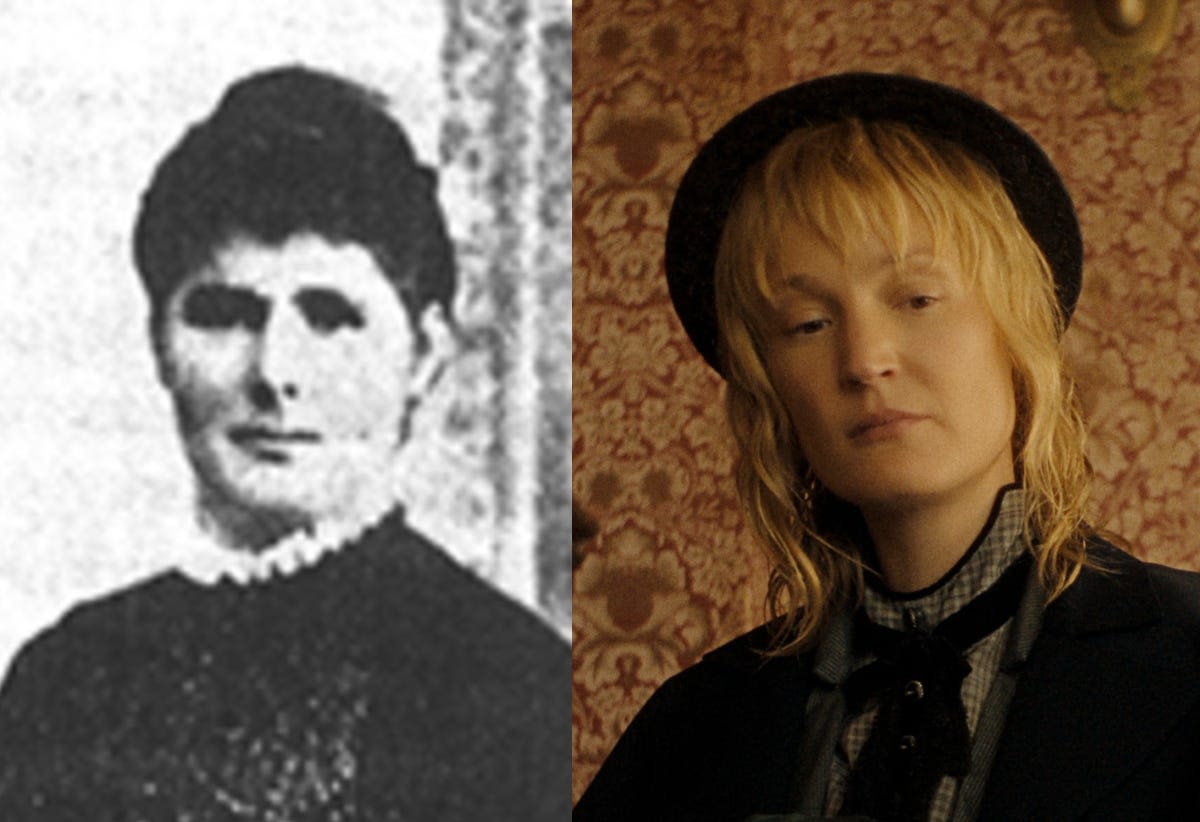
The infamous 1892 double hatchet slayings of Andrew and Abby Borden in Fall River, Massachusetts, have returned to the cultural spotlight with the trailer release of Ryan Murphy's Netflix anthology series, "Monster: The Lizzie Borden Story." As the dramatization prepares to explore the gruesome historical event, renewed attention has centered on Bridget Sullivan, the family domestic servant who stood as one of the primary eyewitnesses to the aftermath and has occasionally been cast by dramatists as a potential accomplice.
In the upcoming fourth season of the Netflix franchise, Luxembourgish actor Vicky Krieps steps into the role of Sullivan, performing opposite Ella Beatty, who portrays Lizzie Borden. While Krieps brings a noticeable German accent to a character who was historically an Irish immigrant, questions remain regarding how strictly the television production will adhere to the documented historical records of 1890s Fall River.
The real-world history of Sullivan paints a detailed picture of life inside the Borden household on Second Street. Sullivan entered the family’s employment in 1889, taking on responsibilities centered on relatively light domestic chores. As an immigrant navigating the household dynamics of the era, she found herself situated in an increasingly uncomfortable domestic environment defined by enduring family discord.
During her years under the Borden roof, Sullivan witnessed substantial animosity between sisters Emma and Lizzie Borden and their stepmother, Abby. The friction within the residence was palpable enough that Sullivan found herself unsettled by the lingering resentment, which permeated daily routines inside the home.
According to historical research presented by authors Michael Martins and Dennis Binette in their notable volume "Parallel Lives," Sullivan grew so uneasy with the household friction that she attempted to resign from her position on multiple occasions. Her departures were prevented only after she was persuaded to remain, with Mrs. Borden going so far as to raise her wages on at least one occasion to secure her continued domestic help.
The strain between the family members was further corroborated by Sullivan's own contemporaneous statements. In an 1892 account published by the Boston Post, the domestic worker reflected on the household dynamics, observing that Abby Borden was simply "too good for them and they did not like her."
Adding to the complex social hierarchy within the household was the manner in which the Borden daughters addressed their domestic employee. Emma and Lizzie, who engaged in minimal housework themselves, routinely called Sullivan by the name "Maggie" rather than using her actual given name.
While some historical observers have interpreted the moniker as an indication of the sisters' low personal regard for their servant, the practice was not unique to the Borden residence. During the late nineteenth century, individuals belonging to wealthier social classes occasionally assigned generic or alternate names to their domestic staff, reflecting common class attitudes of the period.
The days immediately preceding the August 4, 1892, killings were marked by a severe bout of physical illness that struck multiple members of the household. Historical analyses attribute the widespread sickness to food-borne contamination, exacerbated by the oppressive summer heat and the lack of adequate cold storage facilities in the Second Street home.
Although local folklore long suggested that the household was poisoned by spoiled mutton served at the morning meal, official testimony contradicted that legend. Sworn accounts established that several members of the Borden family had already fallen sick well before the mutton was ever prepared or served in the residence.
The physical distress extended directly to Sullivan on the morning the murders occurred. According to her own testimony, the servant was overcome by intense nausea shortly before 9 a.m. after completing her breakfast duties for the family, forcing her to step out into the backyard to vomit.
After recovering briefly from the physical spell, Sullivan returned inside and proceeded with her assigned task of washing the windows. She continued her domestic chores completely unaware that, only a short distance away inside the residence, Andrew and Abby Borden were being violently slain with a hatchet.
In modern pop culture, dramatized retellings have frequently embellished Sullivan's relationship with Lizzie Borden, proposing that the two women engaged in a clandestine romantic affair. These speculative narratives often present this secret lesbian bond as the underlying motive that led the maid to assist or conspire with Lizzie in orchestrating the brutal murders.
This romantic interpretation is not unique to Ryan Murphy's television project. It was prominently featured in Evan Hunter’s 1984 historical novel "Lizzie" and reappeared in the 2018 feature film "Lizzie," which starred Chloë Sevigny in the title role alongside a conspiratorial depiction of the domestic servant.
Despite the persistent popularity of this narrative in fiction and film, no archival or historical evidence exists to suggest that Sullivan was a lesbian or that her relationship with Lizzie Borden ever crossed beyond the conventional boundaries of domestic employee and employer.
Following the sensational trial that captured national headlines, Sullivan permanently distanced herself from the Borden family. She left Fall River entirely, traveling back to Ireland for a brief stay before ultimately returning to make a new life elsewhere in the United States.


(0)