
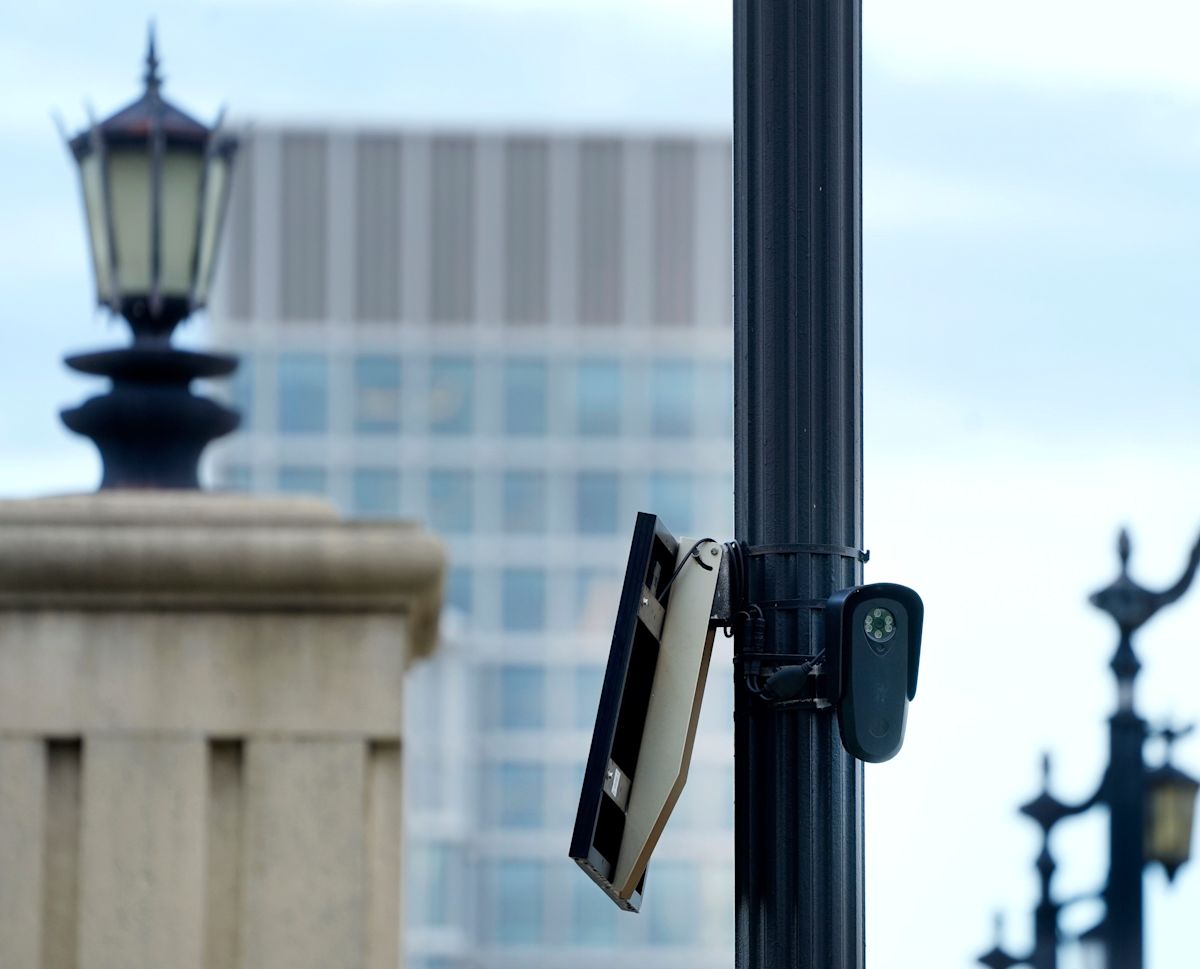
A statewide regulatory decision has accelerated an ongoing debate surrounding automated license plate reader technology in Alachua County, prompting local officials and community advocates to examine the delicate balance between modern law enforcement tools and public privacy safeguards.
The sudden policy shift occurred on August 31, 2026, when the Florida Department of Transportation revoked its general use permits authorizing automated license plate readers within state highway rights-of-way. State officials established a strict 30-day timeline requiring law enforcement agencies across Florida to dismantle and remove any monitoring equipment stationed in those designated zones.
Following the state mandate, Alachua County Sheriff Chad Scott confirmed that 27 automated license plate readers within the county fell under the state's removal criteria. While those specific roadside devices are being taken down to comply with transportation guidelines, other camera systems situated outside state highway rights-of-way continue to operate across the local roadway network.
The rapid removal order coincided with a broader local push for systemic oversight led by independent researcher Sam Cornell. A Gainesville resident and surgical coordinator in organ recovery, Cornell had previously appeared before the Alachua County Commission to urge the five-member board to establish clear regulatory boundaries for the county's automated surveillance network.
Rather than advocating for the total abolition of the camera program, Cornell requested that county commissioners adopt sensible operational standards. His recommendations centered on four core requirements: establishing shorter data retention timelines, implementing independent audit procedures, creating complete transparency regarding user access, and producing a comprehensive public accounting of system expenditures.
All five Alachua County commissioners concurred that the automated tracking network warranted closer examination. The discussion gained significant urgency in light of the subsequent state-level permit revocations, highlighting how swiftly technological deployment can outpace municipal oversight frameworks.
Cornell had spent the summer examining the automated reader program through extensive Florida public records requests. A central question in his initial inquiries was whether the local camera network maintained valid permits from the Florida Department of Transportation, an issue that the state abruptly settled by canceling all active right-of-way authorizations.
Despite the regulatory enforcement, observers and law enforcement officials acknowledge that automated license plate readers provide substantial investigative utility. The network serves as an active tool for tracking stolen motor vehicles, locating missing vulnerable individuals, and generating crucial investigative leads for active criminal cases.
According to Sheriff Scott, automated license plate readers have directly aided investigators in solving serious criminal incidents across Alachua County. The sheriff noted that data captured by the camera system has proven instrumental in resolving homicides, solving armed robberies, and locating individuals reported in missing-person investigations.
Regional data corroborates the investigative benefits highlighted by local authorities. Neighboring Lake County previously provided two dozen operational case summaries documenting how automated license plate recognition assisted detectives in solving various crimes, findings that were subsequently published for public analysis.
However, civic advocates argue that geographical right-of-way boundaries do not constitute an adequate privacy framework. While the state's directive removes cameras from certain highway shoulders, it leaves the broader technological apparatus and its underlying data practices operational across municipal and county corridors.
The central civil liberties concern focuses on the indiscriminate nature of automated vehicle photography. Sheriff Scott acknowledged this reality, observing that the vast majority of motorists captured by the cameras are law-abiding citizens commuting to workplaces or driving children to school, emphasizing that ordinary drivers are not suspects and should never be treated as such.
Both law enforcement leadership and public policy researchers agree that critical questions must be resolved in an open forum. Key issues include defining what vehicle information is collected, establishing how long location records are maintained, identifying which agencies can access the central database, and determining what legal standards justify a database search.
The ongoing inquiry has been aided by administrative transparency within the Alachua County Sheriff's Office. Records custodians fulfilled public records requests concerning the camera network within approximately one week at no cost, allowing community discussions to focus on documented operational practices rather than administrative secrecy.
Community analysts emphasize that automated surveillance systems expanded rapidly before comprehensive public consent and policy guardrails were established. The current reevaluation, accelerated by regulatory action from state officials in Tallahassee, illustrates the necessity of public participation in technology governance.
Further discussions between local researchers, civic leaders, and representatives of the Alachua County Sheriff's Office are planned to address lingering policy questions. The overarching objective remains supporting effective law enforcement practices while ensuring that mass monitoring technologies operate under clear, publicly vetted standards.






(0)