
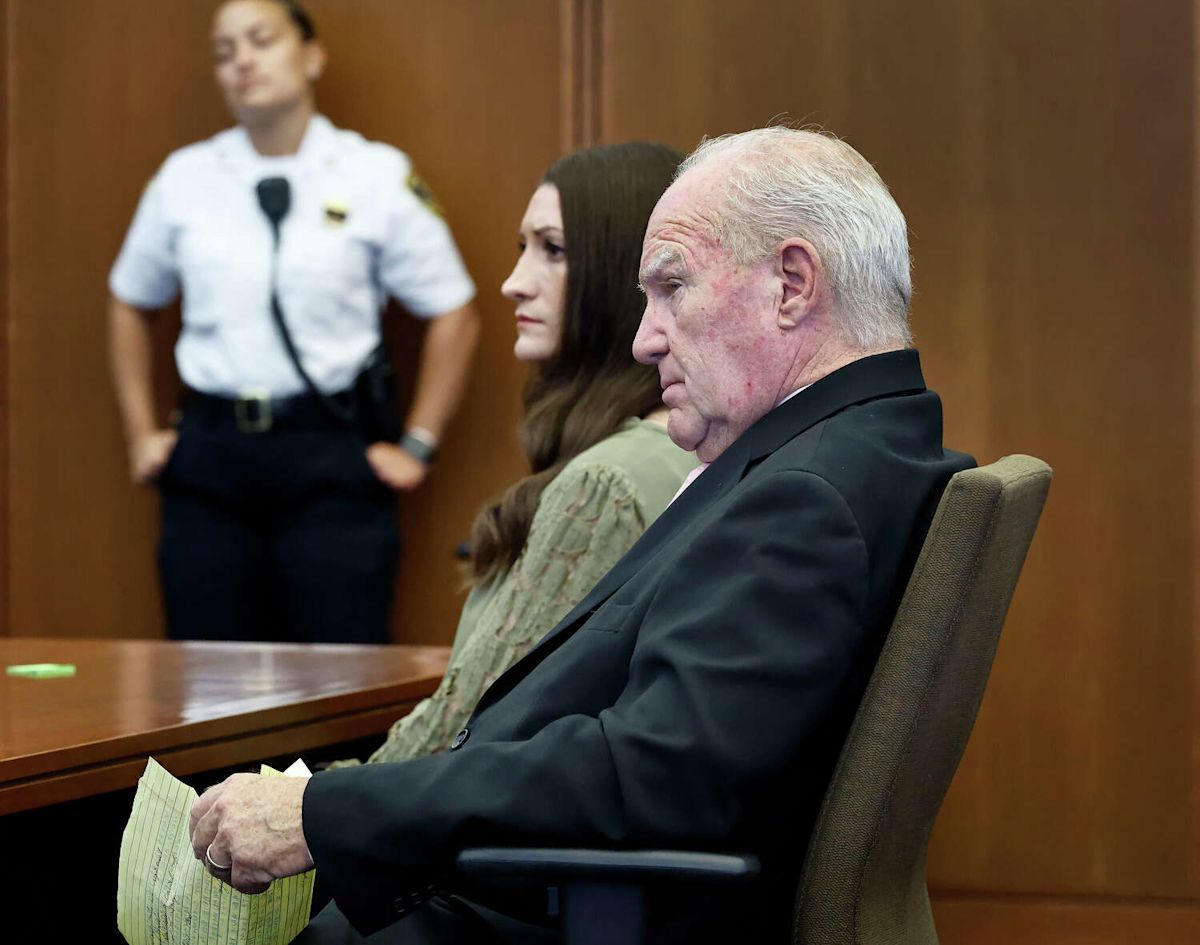
In a decisive measure aimed at protecting the citizens tasked with evaluating one of the region's most emotionally fraught and polarizing criminal trials, a Massachusetts judge has ordered the identities of all jurors who served in the Lindsay Clancy murder trial to remain sealed indefinitely.
Judge William Sullivan issued the directive in a two-page court decision, ruling that official judicial records containing the names of all 18 jurors—a group comprising 12 primary deciding members alongside six alternates—will remain formally impounded until the court explicitly issues a subsequent order lifting the confidentiality.
The protective ruling arises from acute judicial concerns regarding potential retaliation, harassment, and intense public hostility directed at the panel. In his written decision, Judge Sullivan articulated that keeping the identities shielded from the public domain was essential to avert significant harm, concluding that a tangible risk of immediate and irreparable injury exists should the juror registry be made available to the public at this time.
The indefinite impoundment follows the formal conclusion of the high-profile trial on Sept. 4, when Judge Sullivan declared a mistrial after the jury spent approximately a full week sequestered in intensive deliberations without managing to reach a unanimous verdict. At the time the mistrial was declared, the court had initially instituted a temporary 14-day impoundment of the juror list to afford the panel immediate privacy.
However, the intense scrutiny and public rancor surrounding the proceedings did not subside following the mistrial declaration. In detailing his justification for making the secrecy order indefinite, Judge Sullivan highlighted that the case continues to generate what he characterized as significant and deeply divisive attention across both the Commonwealth of Massachusetts and the nation as a whole.
The judge placed particular emphasis on the volatile climate across digital platforms, observing that a substantial volume of social media commentary and online reactions had emerged concerning the jury’s deliberations, creating an environment ripe for targeted friction, intrusive tracking, and public discord.
Physical security concerns at the courthouse also played a central role in the court's protective determination. Sullivan specifically referenced an incident during the trial in which a 56-year-old Massachusetts woman was arrested on courthouse grounds after being caught surreptitiously recording video of jurors as they were leaving the building. Although the individual subsequently claimed that she had only intended to capture footage of Clancy, the unauthorized surveillance highlighted the distinct vulnerabilities facing the panel.
In addition to the filming incident outside the courthouse, Judge Sullivan pointed out that certain jurors had already been publicly identified in external spaces without their permission. The court also noted that at least one member of the jury had formally approached the bench to request that the impoundment order be extended indefinitely to safeguard their personal security and privacy.
Public interest and debate around the case escalated further after several jurors chose to speak directly with journalists in the days preceding Sullivan's order. In those public interviews, former panel members broke the silence of the deliberation room to disclose that the group had stood on the verge of acquitting Clancy on mental health grounds.
The former jurors revealed that 11 of the 12 deciding members had cast votes to find Clancy not guilty by reason of insanity. The weeklong deadlock that ultimately triggered the mistrial was caused by a single holdout juror who refused to align with the rest of the panel in granting an insanity acquittal.
According to the accounts provided to reporters by the participating jurors, the lone dissenting juror held firm against an acquittal even after acknowledging during the course of deliberations that they harbored doubts regarding Clancy's guilt. The public disclosure of this near-unanimous split fueled widespread debate regarding the trial's unresolved conclusion.
The underlying criminal charges against Clancy, a Connecticut native, stem from the tragic deaths of her three young children on Jan. 24, 2023. She stands charged with three counts of first-degree murder for allegedly strangling 5-year-old Cora, 3-year-old Dawson, and 8-month-old Callan inside their home while her then-husband, Patrick Clancy, was away on a brief errand.
Throughout the protracted legal proceedings, Clancy’s defense attorney, Kevin Reddington, argued that the mother was in the throes of severe postpartum psychosis when the killings occurred. The defense maintained that her profound psychiatric condition rendered her not criminally responsible for the fatal acts committed against her children.
Prosecutors, by contrast, presented a sharply conflicting narrative to the court, arguing that Clancy acted with conscious intent and premeditation. The state portrayed Clancy as calculating, manipulative, and controlling, insisting that the killings were purposefully planned rather than the involuntary result of an acute mental health crisis.
By sealing the identities of all 18 jurors indefinitely, Judge Sullivan has erected a durable legal barrier between the panel members and an impassioned public, ensuring that those who fulfilled their civic duty remain shielded from scrutiny, harassment, and safety risks as the divisive legal saga moves forward.





(0)