
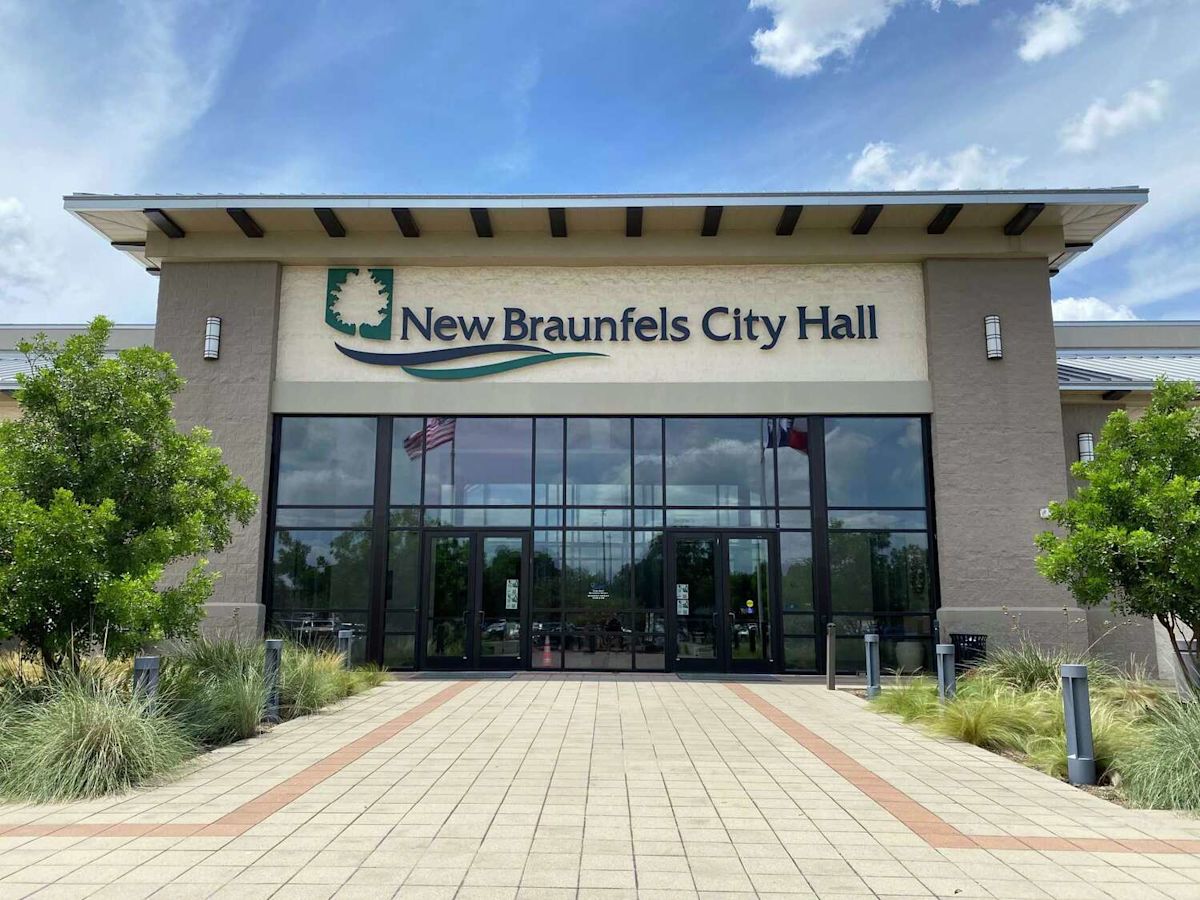
The New Braunfels City Council has decided against waiving up to half a million dollars in municipal utility fees for a proposed affordable apartment complex. Despite rejecting the developer’s specific relief request, municipal leaders emphasized their broad support for the initiative and formally instructed administrative staff to identify alternate financial mechanisms to help bridge the development’s budget deficit.
The council’s unanimous 5-0 vote on Monday serves as an official recommendation to the board of New Braunfels Utilities, advising the entity not to approve the requested fee relief. Mayor Michael French and Councilwoman Toni Carter were absent from the dais during the vote, leaving the remaining five council members to deliver the unified directive.
At the center of the deliberation is the Park at Dogwood, a planned 76-unit residential community situated at 1869 McQueeney Road. Overseen by The Park Companies, the project is currently confronting a $2 million financial deficit, according to details shared by Jeff Jewell, the city’s economic and community development director.
To address the shortfall, the developer formally petitioned municipal officials and New Braunfels Utilities to eliminate up to $500,000 in utility impact fees. These mandatory assessments are levied on new construction projects to help finance the municipal infrastructure required to service new connections. With total utility impact assessments for the site estimated at approximately $1.3 million, the proposed relief would have amounted to a reduction of nearly 40 percent.
New Braunfels Utilities, which manages municipal water, sewer, and electric services, operates as a city-owned entity. Under its established governance policies, any waiver of standard utility impact fees requires a formal recommendation from the city council before the utility board can take action.
As designed, the Park at Dogwood is slated to accommodate local households earning between 30 percent and 60 percent of the area median income. According to Jewell, this translates to annual household earnings between $21,000 and $54,000, depending on the number of family members in residence. Monthly rents across the development are projected to range from $424 to $1,196, dictated by tenant earnings and apartment dimensions.
City documentation reveals that the overall construction and development budget for the complex is roughly $22.3 million. The primary funding engine for the initiative relies on allocations from the federal Low-Income Housing Tax Credit program, which granted tax credits to the project in 2024.
However, progress stalled after the Federal Emergency Management Agency revised local floodplain designations, forcing the development team to alter site engineering and redesign the project. These unexpected delays diminished the proceeds generated by the federal tax credits, causing expected equity from the credits to drop from $17.6 million down to approximately $15.7 million and establishing the current $2 million deficit.
Beyond the requested utility fee relief, municipal records indicate that the developer is also considering a potential waiver of roughly $250,000 in roadway impact fees. To further curtail costs, The Park Companies has already established a formal partnership with the New Braunfels Housing Authority, an arrangement that will grant the property an exemption from local property taxes.
While council members expressed a collective desire to see the affordable housing development succeed, they voiced strong hesitation regarding the utilization of utility revenue waivers as a financing tool. Councilwoman Nikki Shaw argued that forgiving impact fees conflicted with the utility's recent history of raising rates annually since 2023 to pay for growing capital infrastructure demands.
Shaw noted that absorbing development costs through utility mechanisms felt inappropriate given ongoing rate increases on existing residents, stating that the required infrastructure associated with new construction must still be funded. Instead, Shaw recommended approaching the New Braunfels Economic Development Corporation—a municipal entity funded through dedicated sales tax revenue specifically tasked with stimulating economic growth—to explore possible incentive packages.
The council’s position was also tested during a public comment segment marked by community debate. Resident Eva Pepitone criticized the development, alleging it would overburden local schools and negatively alter the neighborhood by introducing single-parent households that would supposedly be unable to oversee their children's schoolwork.
Council members firmly pushed back against those characterizations during their deliberations. Councilman Michael Capizzi emphasized that the city should offer a helping hand to residents seeking stability, rejecting negative portrayals of prospective tenants while voicing support for Shaw’s proposal to seek non-utility funding alternatives.
Councilman D. Lee Edwards offered a personal reflection to underscore the value of affordable housing programs, recalling that in 1977 he lived in a South Carolina single-wide trailer for $125 a month with a newborn infant after experiencing sudden financial hardship. Edwards explained that such housing developments serve as critical springboards that empower working families to rebuild their circumstances and achieve long-term stability.
Other residents attending the meeting aligned with the council’s eventual consensus, stating that while they favored expanding local affordable housing options, they opposed shifting capital infrastructure costs onto New Braunfels Utilities customers. With the fee waiver officially turned down, city staff members are now exploring other avenues to close the remaining funding gap.





(0)