
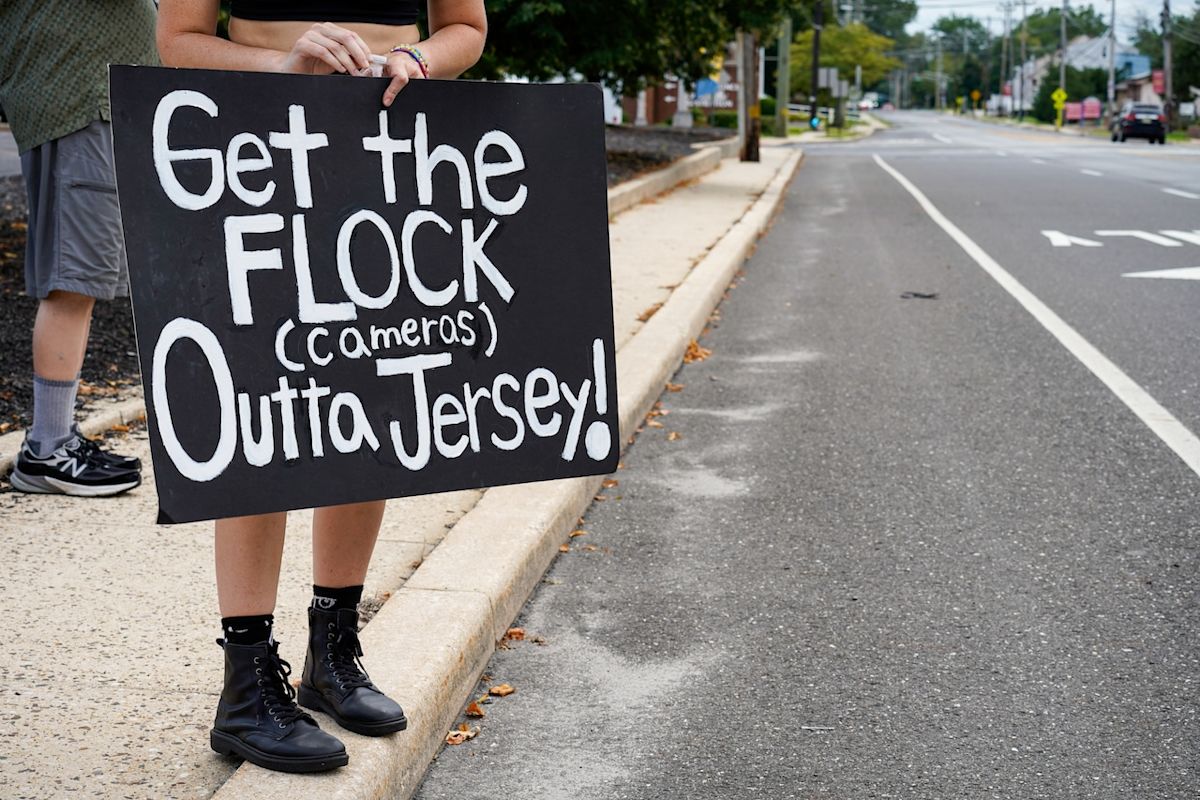
Lawmakers in Trenton are weighing major new regulations on automated license plate readers across New Jersey, proposing strict boundaries on how public agencies utilize the surveillance technology and mandating that captured vehicle data be permanently deleted after just 48 hours.
The measure, designated as Assembly Bill A5483, was formally introduced on September 14 by Assemblyman David Bailey Jr., a Democrat representing Salem County. The legislation represents a comprehensive effort to overhaul the operational standards of automated license plate recognition systems and curtail the expansion of automated vehicular tracking throughout the state.
Automated license plate readers, frequently deployed under the brand name Flock, utilize artificial intelligence cameras to scan passing traffic. These devices continuously record license plate characters, vehicle makes, models, and exterior colors, feeding the collected information into searchable software repositories accessible to authorized users.
A central element of Bailey’s proposal is a drastic reduction in data storage timelines. New Jersey currently retains license plate scan records for up to three years, marking one of the longest retention windows in the country. In contrast, many other states cap retention at 30 days or fewer, while certain jurisdictions discard non-matching scans within five minutes.
Under the provisions of A5483, government databases would be required to execute an automatic and permanent purge of collected scan data within two days. The bill outlines narrow exemptions to this 48-hour deletion rule, permitting longer retention only when records are tied to active criminal investigations, authorized by court orders, or linked to vehicles flagged for serious offenses, lack of registration, or theft.
Assemblyman Bailey emphasized that the legislation aims to strike a necessary balance between modern public safety tools and basic constitutional privacy protections. He noted that while law enforcement has valid uses for license plate readers to combat crime, unchecked artificial intelligence surveillance should not be permitted to track the daily travel routines of law-abiding citizens or retain their data without definitive limits.
Beyond data retention limits, the bill establishes a prohibition against the private operation of automated license plate readers. Private citizens and commercial entities—excluding manufacturers and installation contractors operating strictly in their service capacities—would be barred from using the devices. Any existing private systems would have to be dismantled, their historical data erased, and the state Attorney General would be empowered to initiate civil actions to enforce compliance.
Statewide public agencies would also see their use of the technology curtailed. Non-police governmental entities would only be authorized to install and operate the cameras for specific administrative tasks, such as managing municipal or state parking lots, controlling access to restricted secure facilities, or collecting electronic highway tolls.
For municipal police departments and the New Jersey State Police, camera deployment would be confined strictly to defined "be on the lookout" (BOLO) parameters. Qualifying alerts would include searches for stolen automobiles, unregistered or uninsured motorists, state vehicle inspection infractions, missing individuals, or suspects tied to major criminal cases.
The bill additionally introduces safeguards against discriminatory practices, explicitly barring law enforcement agencies from stationing or directing plate readers to target communities based on race, religious affiliation, national origin, disability, or other legally protected characteristics.
Inter-agency cooperation would also face heightened scrutiny. Rather than allowing informal data sharing, New Jersey agencies would be prohibited from transferring scan information to out-of-state departments or federal entities without obtaining a formal warrant reviewed and approved by the Attorney General. Currently, select neighboring state agencies and New Jersey-based federal authorities have direct search access to state records.
Commercial vendors providing the camera hardware and software would be banned from selling, renting, or transferring captured information to third parties. To ensure ongoing compliance, all agencies deploying the camera networks would be subject to annual system audits and public transparency reporting mandates.
The proposed restrictions arrive as license plate recognition technology has become deeply entrenched across the state. State audit records indicate that 523 of New Jersey's roughly 530 law enforcement agencies maintain some form of plate-reading system, with at least 82 departments across all 21 counties holding contracts specifically with Flock Safety.
The widespread adoption has prompted visible pushback from community activists and civil liberties advocates. Recent demonstrations include a protest by the advocacy group DeFlock South Jersey at a Camden County retail store, as well as a packed council session in Franklin Township where local organizers gathered more than 800 signatures opposing unchecked camera surveillance.
Bailey’s proposal joins a growing slate of legislative efforts in Trenton addressing automated monitoring. Other pending initiatives include a stalled bill by State Senator Benjie Wimberly to reduce data storage to two years with criminal penalties for misuse, a proposal from State Senator Linda Greenstein to block data sharing in out-of-state abortion inquiries, and planned framework legislation from State Senator Michael Testa.


(0)