
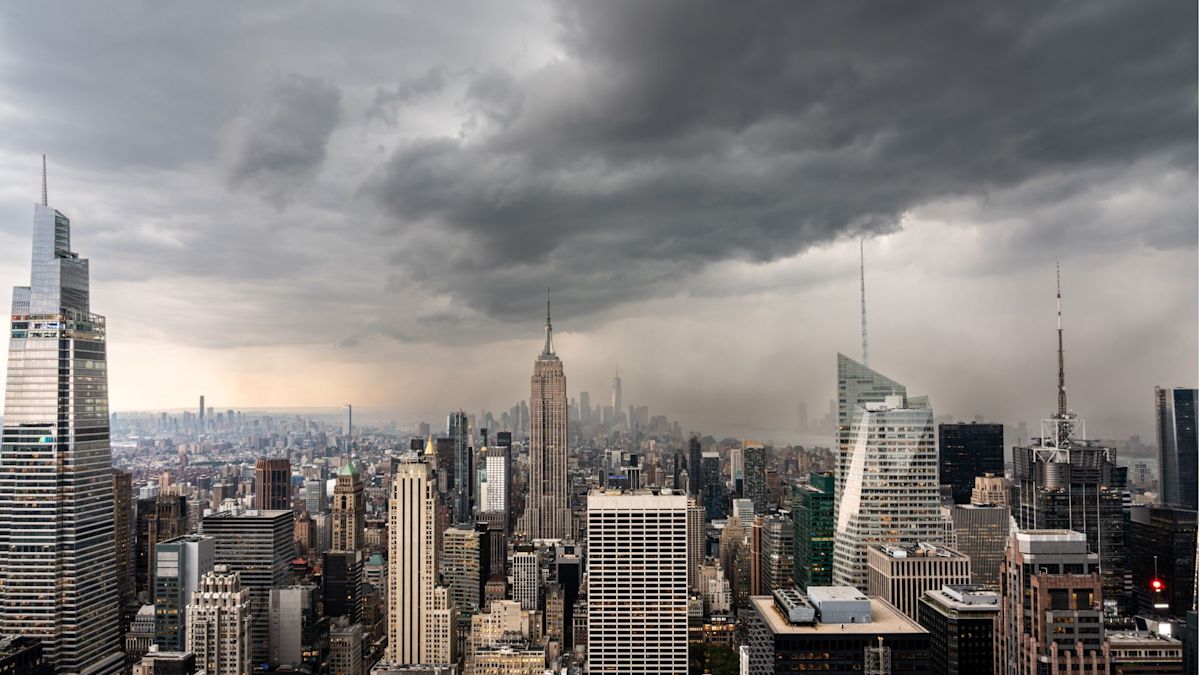
Municipal authorities across New York City escalated emergency preparedness measures this weekend as powerful thunderstorms moved into the region, prompting widespread flood warnings, air travel disruptions, and the urgent opening of dozens of municipal shelters.
A comprehensive Flood Watch was placed into effect across the five boroughs, scheduled to remain active through Sunday midday. The impending deluge and accompanying severe weather also caused immediate travel chaos at major transit hubs, forcing aviation officials to implement ground stops at John F. Kennedy International, LaGuardia, and Newark Liberty International airports.
To shield residents from potential life-threatening conditions, city leadership authorized the opening of 51 emergency overnight shelters beginning Saturday evening. These facilities were specifically established to provide safe harbor for individuals residing in basement units and below-grade apartments, which face the highest risk during rapid inundation events. In an effort to remove barriers to evacuation, officials confirmed that service animals and household pets are fully permitted inside all shelter locations.
Weather forecasters warned that the most dangerous phase of the weather event would unfold during the early morning hours of Sunday, particularly between 5:00 a.m. and 10:00 a.m. Over the course of the storm, the National Weather Service projected total rainfall accumulations ranging from 1.5 to 3 inches across the city, warning that localized pockets could see even higher amounts.
The geographical distribution of the storm suggests that eastern Brooklyn and Queens are at the highest risk of receiving the heaviest precipitation. Neighborhoods that have historically experienced severe drainage failures and flash flooding during prior storm systems were placed under intense scrutiny by emergency responders.
According to meteorological forecasts, rainfall rates could reach between 1 and 2 inches per hour, with the most severe convective storm cells capable of unleashing up to 2.5 inches in a single 60-minute span. Such exceptional precipitation rates routinely surpass the carrying capacity of municipal storm infrastructure, creating rapid surface accumulation.
In response to the developing meteorological threat, NYC Emergency Management formally activated the city's Flash Flood Emergency Plan on Thursday. The early activation allowed operational teams across several municipal departments to initiate mitigation tasks, including clearing debris from street catch basins and pre-positioning critical emergency response assets in vulnerable areas.
Mayor Zohran Mamdani emphasized the around-the-clock nature of the city's response operations while pleading with residents to take proactive safety steps before heading to sleep. He noted that municipal maintenance crews were actively working overnight to clear drainage grates and maintain water flow while the majority of New Yorkers were resting.
The mayor specifically directed warnings toward those residing in subterranean housing, urging them to identify all available exit routes and prepare to transition to higher levels of their buildings should floodwaters begin to rise. He further advised motorists to build significant buffer time into Sunday morning travel, strictly cautioning drivers against attempting to navigate through inundated streets.
Additionally, Mayor Mamdani called on the public to look out for vulnerable neighbors who might require assistance during the severe weather. He urged New Yorkers to stay connected to official communication channels by subscribing to the city's emergency broadcast service, which can be accessed by texting the keyword NOTIFYNYC to 692-692.
NYC Emergency Management Commissioner Christina Farrell echoed the administration's urgent warnings, pointing out that intense cloudbursts can overwhelm urban drainage networks in a matter of minutes. She stressed that the expected timing of the peak downpour—occurring while many people remain asleep—amplifies the inherent danger for residents in vulnerable dwellings.
Commissioner Farrell reiterated that the most potent storms could drop between 2 and 2.5 inches of water in an hour, emphasizing that individuals should not delay safety measures until water is visibly rising inside their homes. Proactive decision-making, she noted, remains the most effective defense against sudden flash floods.
City officials underscored that the rapid deluge will likely cause significant ponding across roadways, with isolated to scattered flash flooding anticipated in low-lying corridors, highway underpasses, and localities suffering from chronic poor drainage. Motorists and pedestrians were urged to treat all pooled water with extreme caution.
Meteorologists expect regional conditions to gradually improve by Sunday afternoon as the storm system shifts eastward away from the metropolitan coastline. However, hazardous lingering water on roadways and near infrastructure may persist for several hours following the heaviest rainfall.
Until the weather system clears entirely, city officials continue to advise residents to avoid water-covered roads, ensure personal electronic devices remain fully charged, closely monitor local weather forecasts, and check on elderly or vulnerable family members. Emergency agencies emphasized that anyone finding themselves in immediate physical peril should contact 911 without delay.







(0)