
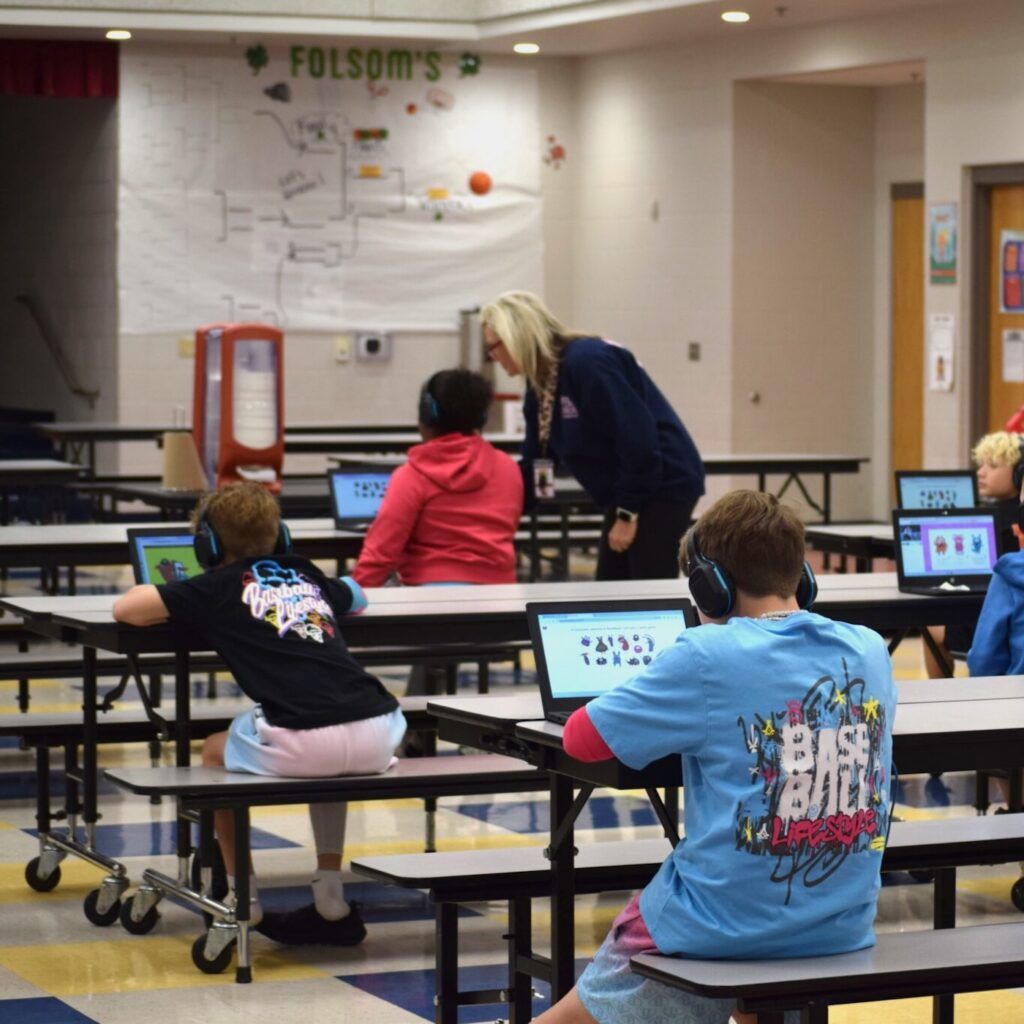
Public school systems across Ohio have reached a pivotal milestone after meeting a state statutory mandate requiring all traditional school districts, community schools, and STEM academies to establish formal artificial intelligence policies by July 1, 2026. With those baseline guidelines officially on the books, educational leaders and teachers are now confronting the intricate task of translating administrative frameworks into functional, everyday classroom practices.
The transition from policy adoption to instructional execution represents the most challenging phase of the state's technology initiative. While the foundational regulations have been established across the state, local administrators must now ensure that their newly enacted guidelines genuinely support meaningful learning rather than merely satisfying bureaucratic compliance as academic sessions get underway.
Guidance provided by the Ohio Department of Education and Workforce offers a structured foundation for local districts. The state’s official model policy outlines key regulatory areas, directing school boards to establish clear standards regarding student and staff application, digital privacy safeguards, ethical considerations, the management of third-party software tools, instructional practices, and the direct impact of artificial intelligence on curricular objectives and academic assessment.
Despite the breadth of these official categories, education experts note that standard policy frameworks can leave a critical classroom dilemma unresolved. Even when a district's rules address every required topic on paper, educators are still left with the fundamental challenge of determining whether artificial intelligence tools assisted a student in grasping the academic material or simply served as an automated mechanism to generate an end product.
To bridge this operational gap, a specialized proof-of-learning standard has been proposed for the ongoing rollout of Ohio’s school policies. This pedagogical approach is designed to provide teachers with actionable insight into a student’s cognitive process, ensuring that the technology operates as an aid to comprehension rather than a substitute for intellectual effort.
Under the proposed standard, whenever generative artificial intelligence materially contributes to an assignment submitted for evaluation, the student would be required to submit a concise four-part disclosure. This explanatory note details the exact prompts or directives given to the machine, the specific elements of the generated output that the student modified or discarded, the facts and references that were independently verified, and the concepts the student can explain or execute without the software.
Proponents emphasize that this accountability measure is designed to remain strictly narrow and practical in its application. It is not intended to burden students with bureaucratic reporting for basic digital conveniences such as automated spellcheck, autocomplete functions, or standard document formatting. Instead, the disclosure requirement is triggered only when advanced automated systems materially shape reasoning, research methods, prose composition, programming code, creative design, or final analytical conclusions.
This structured reflection aligns directly with the state model policy’s directive that districts carefully evaluate how automated tools influence academic objectives and student evaluation. Rather than attempting to evaluate a student's underlying mastery purely from polished, submitted text, a proof-of-learning note provides teachers with direct evidence of the student’s independent critical judgment and analytical choices.
The necessity for such insight is amplified by the distinct nature of modern generative systems, which can effortlessly produce sophisticated and articulate responses that mask significant deficits in understanding. Because the software can output fluent prose instantly, students may submit plausible-sounding work without possessing the foundational knowledge required to spot faulty premises, hallucinated source citations, or superficial logic.
Educational specialists argue that this documentation model offers a superior alternative to automated detection software. Prioritizing automated surveillance tools often fosters an adversarial dynamic centered on concealing technology use, distracting from substantive instruction. By shifting focus toward documented human decision-making, teachers can verify the actual intellectual labor performed without resorting to invasive monitoring.
The proof-of-learning framework is designed to function across diverse academic disciplines. In an advanced history course, for instance, a student might document that an automated query suggested several historical causes for a conflict, but note that one cause was rejected after cross-checking primary source documents. In computer science, a pupil could explain how an automated snippet failed an edge-case test and detail the manual corrections made to fix the code.
Similarly, in career and technical education environments, students could demonstrate how an automated procedural draft was adapted to meet hands-on safety standards and equipment operating manuals. Across all subject areas, the primary evidence of learning stems from the student’s documented evaluation and verification, rather than a simple digital transcript or screenshot of an automated exchange.
The proactive adoption of school-level guidelines in Ohio stands in contrast to the broader regulatory landscape. Reporting from the Ohio Capital Journal in May highlighted that wider legislative attempts to regulate artificial intelligence across the state had stalled due to uncertainty regarding enforcement mechanisms. In contrast, the public education sector maintains a defined legal structure, established deadlines, and localized authority to implement practical oversight.
Beyond immediate classroom applications, practicing this standard of documentation equips students with indispensable skills for the modern workforce. While contemporary employers widely expect staff to utilize automated tools to boost productivity, businesses remain dependent on human professionals who can detect errors, safeguard sensitive information, determine when human discretion is required, and take full accountability for outcomes.
By developing the habit of validating, editing, and documenting their interactions with advanced software, Ohio students cultivate practical supervisory skills that extend far beyond basic prompt drafting. Instilling this standard of human oversight helps ensure that public education produces graduates capable of directing technology responsibly across future academic and professional settings.







(0)