
As political campaigns intensify across Oklahoma, voters are increasingly finding their mailboxes filled with election flyers and their screens packed with political advertisements invoking religious language. In response to this influx of faith-centric political marketing, several local Christian ministers are speaking out against what they view as the opportunistic co-optation of spiritual beliefs for electoral advantage.
Across thousands of households throughout the state, campaign literature has arrived explicitly claiming that casting a ballot for specific candidates equates to standing up for Christian values. At the same time, television commercials routinely depict political contenders walking through church sanctuaries in an effort to showcase their religious standing to prospective voters.
For a number of local clergy members, this overt blending of faith and partisan posturing has raised significant concerns. Pastors are increasingly troubled by how sacred theological language is being deployed to sway the public while leaving behind the fundamental ethical principles found in scripture.
The Rev. Mark Foster, senior pastor of Acts 2 United Methodist Church in Edmond, has been among the leaders directly addressing this political messaging. He has openly questioned what candidates actually intend to communicate when they present themselves and their political platforms as the sole representatives of faith-based morality.
Foster observed that although promotional mailers readily proclaim that voting for a given contender is a vote for Christian values, such literature rarely provides a clear definition of what those virtues represent in daily life. He raised the question of whether these candidates mean extending aid to the hungry, supporting neighbors in need, or offering hospitality to strangers and immigrants within the community.
According to Foster, political figures too frequently pick and choose isolated principles to support their partisan agendas rather than embracing a broader, comprehensive biblical witness. He noted that the concepts highlighted on the campaign trail rarely align with the core teachings of the Beatitudes found in the fifth chapter of the Gospel of Matthew.
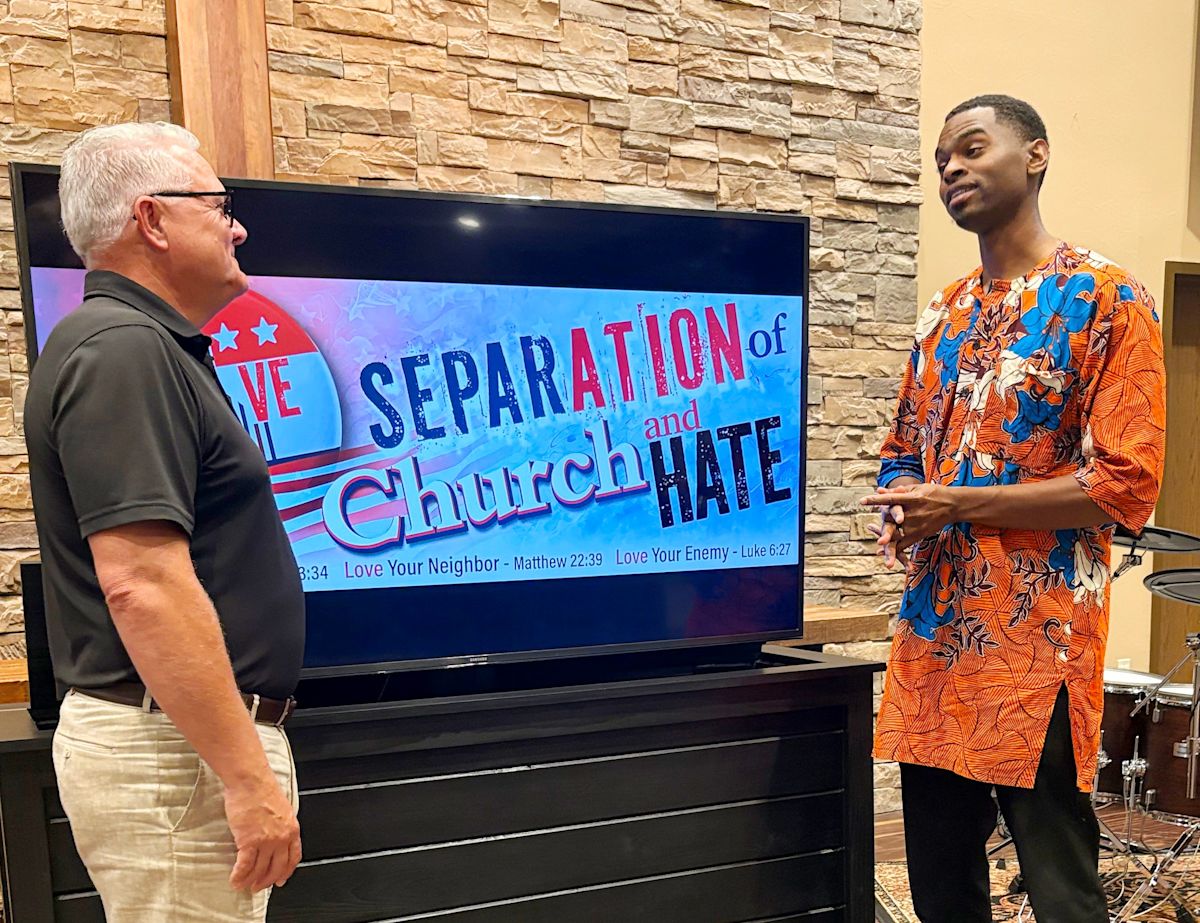
To help his congregation navigate this complex campaign season, Foster launched a specialized sermon series titled "Separation of Church and Hate." The objective of the program is to assist attendees at Acts 2 United Methodist Church in discerning between individuals who embody genuine Christian principles and those who merely claim religious affiliation for political gain.
During the series debut on Sept. 6, Foster addressed his church members directly, warning them of the spiritual and ethical dangers associated with manipulative political rhetoric. He cautioned that misrepresenting the gospel to advance hostile or exclusionary platforms undermines the heart of the Christian message.
Foster told the congregation that it is both wrong and dangerous for politicians to take the faith centered on Christ's love and distort it over the course of a campaign to merge religious devotion with meanness. His teaching series seeks to give believers practical guidance to reject divisive rhetoric that seeks to divide communities.
As part of the initiative at the Edmond church, guest speaker Julian Davis Reid was invited to deliver a message aligned with the "Separation of Church and Hate" theme. Reid’s presentation further encouraged attendees to thoughtfully reflect on their spiritual responsibilities and civic engagement during a polarizing election cycle.
Acts 2 United Methodist Church is not alone in its efforts to address these issues from the pulpit. Several other congregations across Oklahoma are actively developing sermon series and programming designed to counter hostility, polarization, and ideologies such as Christian nationalism.
Among those leading similar efforts is the Rev. David Wheeler, senior minister at New Covenant Christian Church (Disciples of Christ). Wheeler is introducing a dedicated pulpit series titled "Faith Was Never Supposed to be Silent: Justice is What Faith Sounds Like in Public," scheduled to begin on Sept. 13.
Wheeler’s upcoming series aims to emphasize that authentic Christian engagement in the public sphere should be marked by an active pursuit of justice rather than partisanship. By focusing on public justice, the church seeks to provide an alternative perspective to conventional campaign narratives that utilize faith primarily as a tool for division.
These coordinated pastoral responses highlight a broader movement among Oklahoma religious leaders to protect theological integrity amid contentious elections. Ministers across the state continue to urge their congregations to look past campaign advertisements and evaluate public life through the foundational values of compassion, justice, and community care.





(0)