
The Renton City Council is set to decide on a proposed ordinance that would prohibit unauthorized camping across public properties throughout the city. If approved, the measure would place Renton among a growing list of Washington municipalities tightening regulations on public spaces in response to widespread homelessness and safety concerns.
The anticipated vote marks a significant shift in local policy, reflecting a broader trend across the Puget Sound region. Nearby communities, including Lakewood, Tukwila, and Burien, have already adopted comparable bans to manage unsanctioned encampments and prevent the prolonged occupation of civic grounds.
These local legislative efforts have gained momentum in the wake of a pivotal ruling by the U.S. Supreme Court. The nation's highest court determined that municipal prohibitions against public camping do not violate the Eighth Amendment’s constitutional protections against cruel and unusual punishment, providing local authorities with expanded legal clearance to enforce public space rules.
Under the provisions of the draft ordinance being considered by Renton officials, individuals would be strictly prohibited from setting up temporary shelters on publicly owned land. The ban would bar the erection of tents, tarps, and similar makeshift living structures in diverse civic locations, encompassing municipal parking lots, public parks, walking trails, and other city-controlled sites.
Beyond the physical setup of tents and coverings, the legislation targets several related activities that frequently accompany long-term encampments. The proposed rules outlaw the lighting of open fires on municipal property, as well as the unauthorized storage of personal belongings, gear, and stashed shopping carts in public spaces.
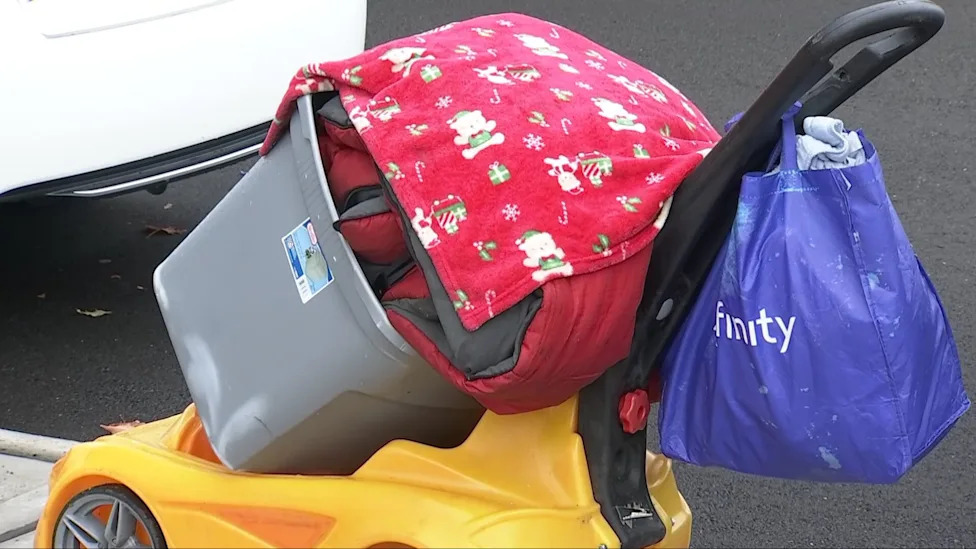
The impending policy change has brought sharp focus to the daily realities faced by unsanctioned campers who navigate life on the city's streets. For unhoused residents like Nicole, who maneuvers through downtown Renton carrying all of her remaining possessions on a child's push car, the measure presents immediate and severe complications.
Nicole, who has lived without stable housing for three to four years after losing everything she owned, typically seeks refuge overnight in open parking lots. For her and others in similar circumstances, open municipal asphalt and sidewalks have served as the only accessible places of rest when alternative housing options feel out of reach or unviable.
While emergency housing is frequently presented as the standard alternative to street camping, Nicole explained that she actively avoids institutional shelters. Expressing a deep-seated distrust of existing facility environments, she characterized them as unhealthy and untrustworthy, stating that she would rather remain exposed to the street elements than sleep inside a shelter facility.
The policy debate, however, encompasses broader community concerns regarding public safety, order, and neighborhood welfare. Max Komar, representing the non-profit organization Battlefield Addiction, noted that public policy must strike a delicate balance between aiding vulnerable populations and protecting general civic well-being.
Battlefield Addiction frequently interacts with individuals navigating severe substance use disorders who have taken up residence in informal outdoor settlements. Komar argued that municipal strategies can and should simultaneously incorporate both compassion and accountability when addressing the fallout of addiction and displacement.
Advocating for balanced civic regulations, Komar emphasized that local families and neighborhood residents deserve to feel safe in their shared community spaces. In his view, well-structured policies serve to curb open-air drug activity and hazardous, unauthorized camping while ensuring that individuals living outdoors are actively linked with essential support systems.
To address these concerns, Renton’s proposed ordinance explicitly includes provisions requiring authorities to offer supportive resources and outreach assistance to unhoused individuals encountered on public property, aiming to encourage voluntary engagement with social services.
At the same time, the measure establishes clear enforcement protocols by designating specific municipal areas as trespassing zones. Individuals who repeatedly refuse compliance or return to restricted civic spaces after being warned could face formal legal intervention.
Under the framework of the proposed law, persistent violations can be escalated to misdemeanor criminal charges. In accordance with state guidelines, individuals convicted of such misdemeanors could face penalties of up to 90 days of incarceration alongside monetary fines reaching up to $1,000.
These escalating punitive mechanisms create a daunting dilemma for long-term unhoused residents who resist traditional shelter systems. With city parking lots, trails, and parks effectively closed to overnight stays and the risk of jail time and fines looming, individuals like Nicole face dwindling options for where they can legally exist with their belongings.
As council members prepare to cast their votes on Monday, Renton stands at a crucial juncture. The council's decision will determine whether the city implements strict enforcement mechanisms to reclaim public spaces, adding Renton to the regional movement reshaping homelessness management across Washington State.


(0)