
Federal lawmakers representing Rhode Island are intensifying pressure on the Trump administration, demanding formal documentation and clear explanations regarding the repeated rejection of federal disaster assistance following a catastrophic blizzard in February 2026.
In a formal communication dated September 9, U.S. Senators Jack Reed and Sheldon Whitehouse, alongside U.S. Representatives Seth Magaziner and Gabe Amo, directed a joint inquiry to the Department of Homeland Security and its sub-agency, the Federal Emergency Management Agency. The congressional delegation called for the preservation and immediate disclosure of all agency records related to Rhode Island’s denied petition for a major disaster declaration.
The dispute stems from Governor Dan McKee’s initial request submitted on April 7, in which state officials sought $19 million in federal relief under the Stafford Disaster Relief and Emergency Assistance Act. The statutory framework permits state executives to request federal intervention when severe meteorological events inflict damage that exceeds state and municipal response capacities.
FEMA formally rejected the state’s application on July 2. Following an appeal filed by Governor McKee, the federal agency reaffirmed its rejection on September 2, leaving state and municipal budgets to absorb the full financial burden of the storm's aftermath.
The recurring denials prompted sharp criticism from state leadership, with Governor McKee describing the federal government's refusal to provide blizzard recovery funds as a new low in emergency management relations. Congressional members echoed this frustration, emphasizing that federal authorities had failed to provide any substantive justification for the refusal.
Lawmakers noted that FEMA’s official denial letters provided virtually no written analysis or empirical justification for the decision, despite Rhode Island exceeding the agency’s established financial thresholds for disaster aid. The agency’s written response merely stated that, following an evaluation of available information, supplemental assistance under the Stafford Act was deemed unwarranted.
Public commentary from federal emergency leadership further escalated tensions. On September 3, FEMA Administrator Cameron Hamilton posted a statement on social media addressing the denial, asserting that appealing states had failed to provide new information and remarking that winter weather is a common occurrence in the northeastern United States.
Hamilton’s sweeping justification extended beyond Rhode Island, serving as the administration's rationale for rejecting similar disaster recovery funding requests submitted by officials in New York, New Jersey, and Massachusetts following the same severe weather pattern.
Rhode Island’s congressional delegation forcefully rejected Hamilton's dismissal, stating that characterizing the historic February storm as routine seasonal weather was inaccurate and disregarded the severe economic and physical disruption suffered by local families and regional businesses.
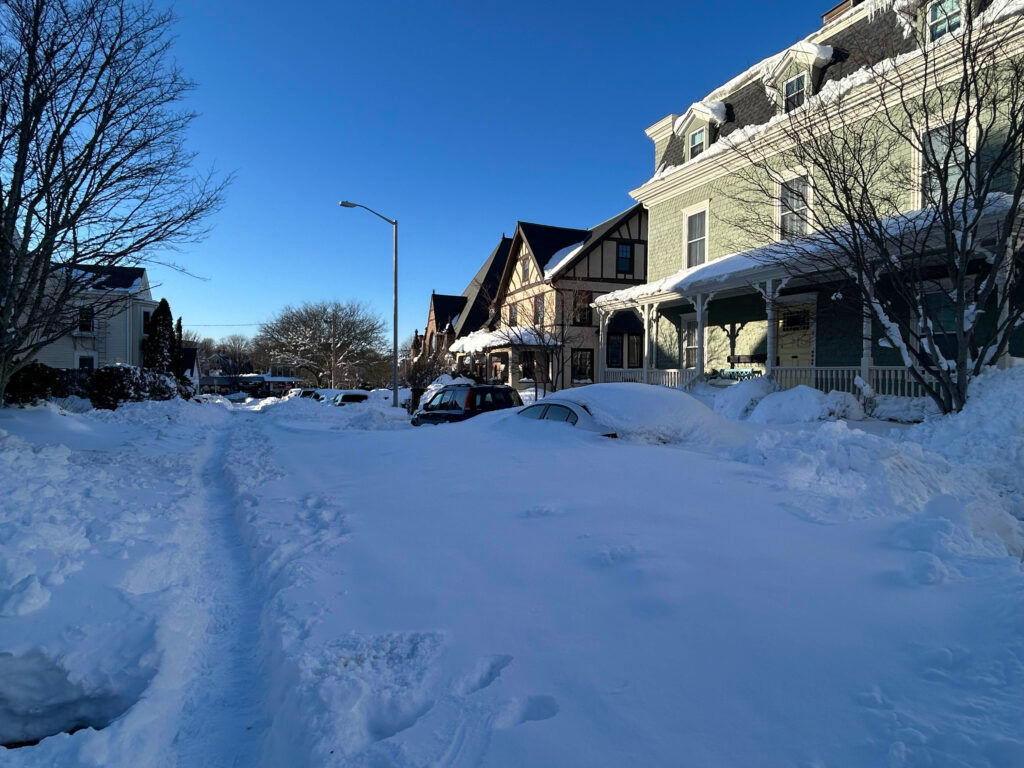
Meteorological data from the storm underscores the exceptional nature of the event. When the blizzard struck on Monday, February 23, 2026, it deposited more than 3 feet of snow across large portions of the state, with official instruments at Rhode Island T.F. Green International Airport recording a total accumulation of 37.9 inches.
The recorded accumulation surpassed the historic benchmark set during the notorious Blizzard of 1978, which deposited 28.6 inches of snow across the state. In addition to unprecedented snowfall, the 2026 storm generated wind gusts reaching 74 mph, matching the intensity of a Category 2 hurricane.
The extreme winds and heavy snow paralyzed regional infrastructure, stranding vehicles on unplowed thoroughfares across communities such as Newport and knocking out electrical power to thousands of homes and businesses throughout the state.
The physical devastation resulted in an estimated $19 million in emergency response, cleanup, and infrastructure repair costs statewide. Approximately $9 million of the total was incurred directly by state agencies, while municipal governments across Rhode Island were forced to shoulder the remaining $10 million in local expenditures.
In their oversight letter, the federal lawmakers asserted that reviewing internal communications and deliberative records within the Department of Homeland Security is essential to evaluate whether Administrator Hamilton's public remarks reflect legitimate internal evaluations or unsubstantiated conclusions.
The congressional members warned that if the federal agency fails to preserve and turn over the requested documentation, it would be reasonable to conclude that the administration's justification for denying emergency relief is entirely devoid of merit.
Responding to inquiries regarding the congressional demand, spokespeople for FEMA and the Department of Homeland Security maintained the administration’s position, reiterating that the state had failed to supply new qualifying information during its administrative appeal.


(0)