
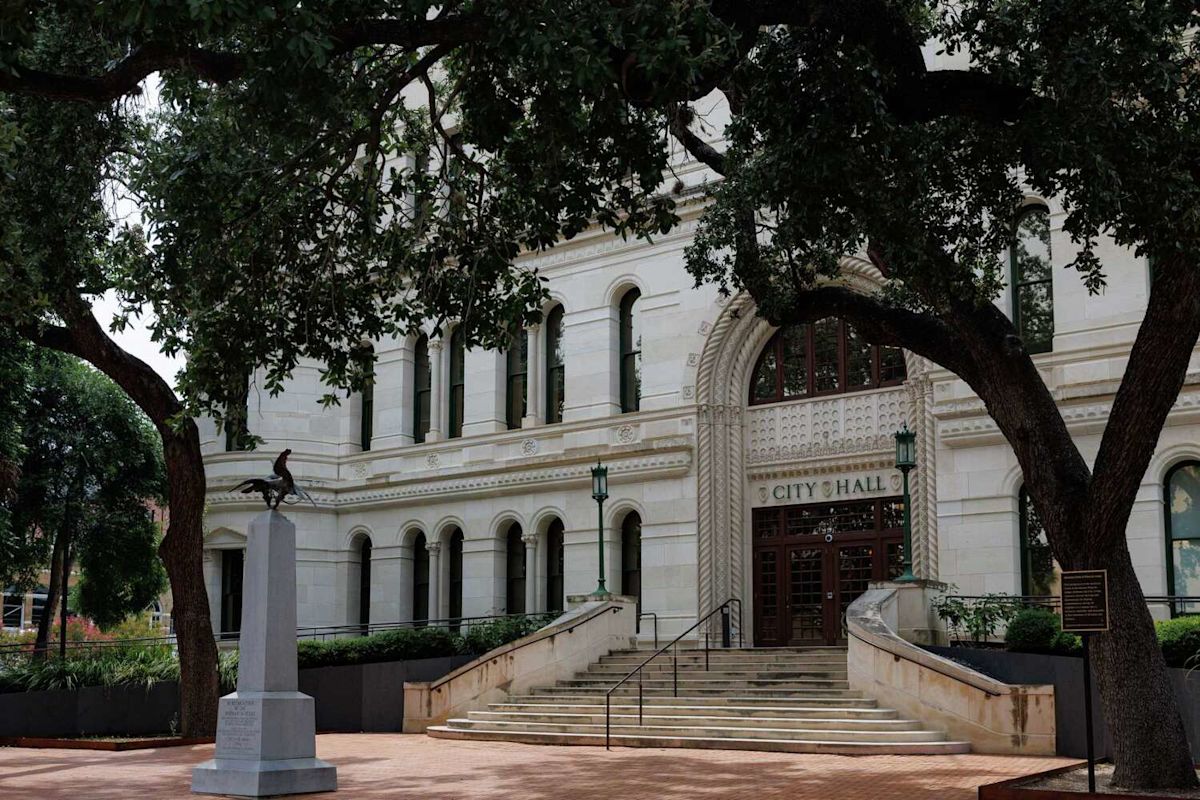
Tensions inside San Antonio City Hall have reached a critical peak as Mayor Gina Ortiz Jones and members of the City Council prepare to cast defining votes on the city's annual fiscal plan. Officials are confronting one of the most contentious budgetary dilemmas the municipality has faced in decades: whether to approve the city's first property tax rate hike in thirty years or enact severe spending cutbacks to keep the municipal government operating within its means.
The heightened friction comes as city leaders work to close a looming $158 million projected deficit spanning the next two fiscal years. The strain has spilled into public view, with two council members turning to social media over the past week to highlight an increasingly fractured environment within municipal leadership following heated deliberations over land financing for a new San Antonio Spurs arena and other municipal endeavors.
At the center of the debate is a proposed $4.4 billion budget drafted by City Manager Erik Walsh. To balance the ledger for the upcoming fiscal year, Walsh has outlined a package that includes $41 million in operational reductions paired with a property tax rate increase of two cents. Under this blueprint, the tax rate would rise to slightly more than 56 cents per $100 of assessed property valuation.
According to municipal financial assessments, the proposed rate adjustment would cost the average homeowner holding a homestead exemption approximately $35 in additional property taxes annually. Supporters view this revenue as vital for preserving standard public services, but the measure has encountered steadfast resistance from fiscally conservative council members.
Walsh’s proposed $41 million in immediate spending reductions targets several areas of city government. The plan would eliminate 101 municipal positions, shutter the city's former diversity, equity, and inclusion office, curb overtime expenditures across municipal departments, and trim grant allocations awarded to local non-profit organizations.
Despite extensive preparation by city staff, final budget decisions remain fluid. Council members have dedicated long hours to negotiations in an effort to adjust funding allocations and safeguard individual district priorities ahead of mandatory deadlines. Under the San Antonio city charter, a balanced budget must be officially adopted by September 27 before taking effect on October 1.
The council faces high procedural hurdles to pass the revenue adjustment. Under state law, any property tax rate increase of the scale proposed by Walsh requires a 60 percent supermajority vote of the City Council. In practice, this means seven council members must vote in favor to implement the rate adjustment, while five opposing votes are sufficient to defeat the measure.
A coalition of three council members—Marina Alderete Gavito, Misty Spears, and Marc Whyte—has firmly rejected the proposed tax rate increase. These members maintain that the city should implement deeper spending reductions rather than increase costs for residents who are already grappling with inflated living expenses for everyday necessities such as groceries and fuel, alongside pending rate increases for the San Antonio Water System.
To successfully block the property tax increase, the dissenting trio needs to persuade only two additional council members to align with their position. However, Whyte acknowledged earlier in the week that efforts to recruit more colleagues to their side had not yet succeeded.
Conversely, council members Sukh Kaur, Phyllis Viagran, and Edward Mungia have publicly signaled their backing for Walsh's proposed tax increase, with the majority of the remaining council members seemingly prepared to follow suit. Viagran has emerged as the most outspoken proponent of the rate adjustment, framing the revenue measure as a necessary long-term investment in San Antonio's infrastructure and community growth, noting she had previously favored an even larger increase to prevent program eliminations.
The financial stakes of Thursday's vote remain steep for city operations. If the council rejects Walsh’s proposed tax increase, the property tax rate will remain flat, triggering an additional $75 million in mandatory spending cuts over the next two years. That scenario would force $31.2 million in further reductions from the immediate upcoming budget.
Such extensive additional reductions would lead to the elimination of an estimated 138 more municipal jobs. Furthermore, city management warned that deeper cutbacks would inevitably result in harsher operational rollbacks across community-facing infrastructure, particularly affecting San Antonio's public library branches and municipal park systems.
The debate surrounding potential service reductions has sparked intense ideological confrontations among council colleagues. During earlier budget briefings, council members representing the city's East, West, and South sides sharply criticized opponents of the tax increase, arguing that spending cuts would disproportionately harm lower-income neighborhoods that rely heavily on city-funded resources and services.
In response, Alderete Gavito pushed back against the administration, accusing Walsh of intentionally stoking division among council members by placing public-facing amenities on the chopping block rather than trimming administrative overhead. Meanwhile, Walsh has clarified that if the council passes the broad budget without adopting the accompanying tax hike, city staff will implement the deeper administrative cuts without returning to council for another vote.
In an effort to bridge the divide, Councilwoman Ivalis Meza Gonzalez floated an alternative compromise that would slightly lower Walsh's proposed tax increase. However, her proposal would still leave the city needing to identify $13.4 million in budget cuts next year. The compromise failed to gain significant traction among colleagues during recent briefings and was excluded from the formal list of potential amendments submitted by the city manager.





(0)