
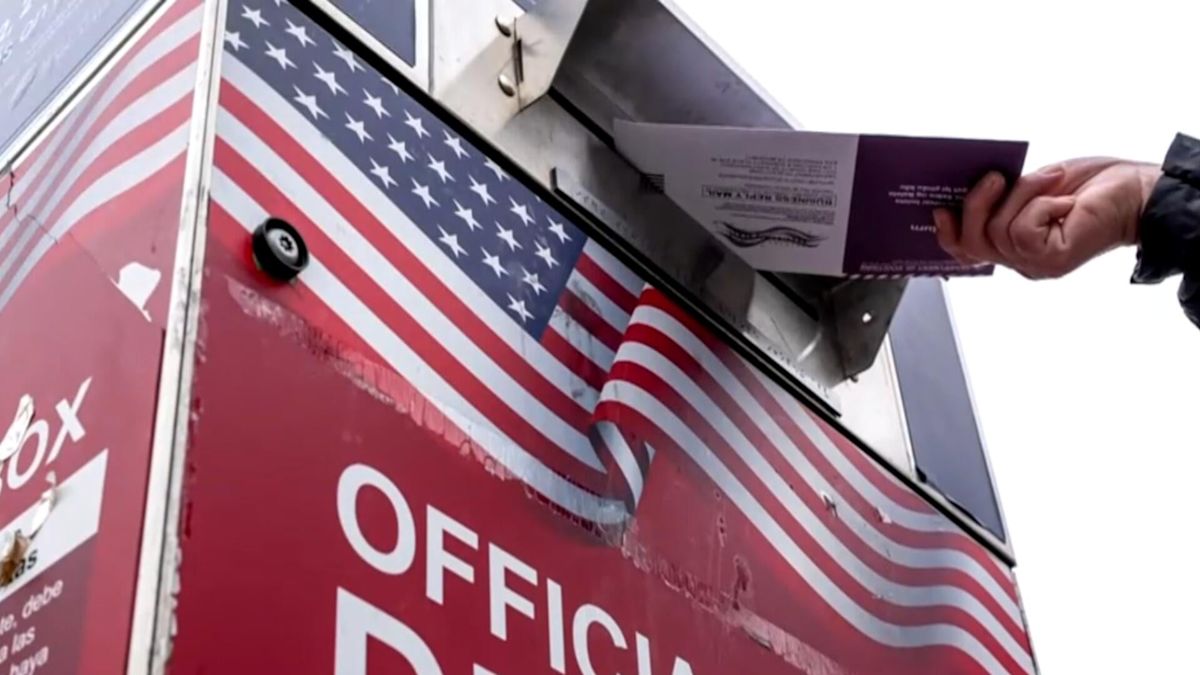
The Supreme Court has declined to reinstate new United States Postal Service rules governing mail-in ballots, leaving a lower court injunction in place and dealing a major setback to the Trump administration ahead of the upcoming November midterm elections. The decision prevents the federal government from enforcing newly finalized mail voting standards while legal challenges work their way through the judiciary.
In a brief, unsigned order issued on Monday, the high court determined that the federal government was unlikely to succeed on the merits of its appeal against the preliminary injunction issued by a federal district court. By maintaining the freeze, the justices ensured that the contentious regulations will not disrupt ongoing election preparations across the country.
The court's action comes as state and local election administrators have already started distributing mail ballots to registered voters in several states. Officials on the ground had previously cautioned that instituting drastic operational changes so close to the election would create severe administrative hurdles that could compromise the voting process.
Justice Brett Kavanaugh sided with the court's majority, penning an opinion that addressed both the scope of agency power and the timing of the policy. While Kavanaugh observed that the Postal Service likely has a fair prospect of acting within its statutory authority, he concluded that imposing the mandate immediately before the November midterms would violate the Administrative Procedure Act by being arbitrary and capricious, given the severe time constraints facing local election administrators.
In contrast, conservative Justices Clarence Thomas and Samuel Alito dissented from the decision to uphold the injunction. Both justices argued that the coalition of states challenging the Postal Service's revised regulations were unlikely to prove that the newly introduced policy was unlawful.
The contested rules, which were finalized by the agency late last month, sought to introduce strict technical standards for mail voting. Under the directive, mail ballot envelopes would have to adhere to specific design mandates, including the incorporation of unique barcodes, while election officials would be required to upload voter information into a newly established federal online portal.
Under the agency's proposed framework, any ballot mailings failing to comply with the new technical specifications would be turned away and returned to local election offices. This enforcement mechanism raised immediate red flags among state and municipal authorities tasked with administering elections.
Voting rights advocates and Democratic-led state officials launched legal challenges against the rules, arguing that the regulations represented an unconstitutional encroachment on the states' traditional authority to oversee federal and local elections. They maintained that Congress had never granted the Postal Service statutory authority to govern election administration or set voting mandates.
In legal filings submitted prior to the high court's ruling, challengers warned that attempting to comply with the rules on such short notice was virtually impossible. They stressed that the abrupt shift could disenfranchise millions of voters who rely on mail ballots, potentially barring some citizens from casting their votes entirely.
The plaintiffs further argued that enforcing the requirements would spark widespread chaos on the ground. They noted that the rollout was fraught with an extreme risk of error, warning that even well-intentioned compliance efforts would likely run into technical breakdowns, agency ineptitude, and postal delivery delays.
The Trump administration defended the regulations as a necessary and modest safeguard against potential election fraud. In briefs submitted to the court, Solicitor General D. John Sauer argued that mail-in voting presents a pernicious form of fraud capable of diluting legal votes and eroding public faith in the electoral process.
Sauer asserted that the measures fell squarely within constitutional boundaries, contending that the rules regulate the federal mail stream rather than the elections themselves. The government maintained that while states maintain authority over election operations, choosing to utilize the federal postal network subjects their mailings to congressional rulemaking powers regarding envelope dimensions, designs, and addressee data.
Despite the administration's arguments, officials have presented no evidence showing widespread voter fraud connected to mail balloting systems. The assertions also contrast with President Donald Trump's own voting practices, as he has cast his ballot by mail in Florida elections earlier this year.
The current legal confrontation traces back to late March, when President Trump signed an executive order directing the Postal Service to craft mail ballot regulations and ordering the Department of Homeland Security to assemble state-level lists of verified U.S. citizens. That directive prompted swift lawsuits from Democratic state attorneys general seeking to block the federal mandates.
U.S. District Judge Indira Talwani in Massachusetts initially blocked core elements of the executive order, but the Supreme Court temporarily paused her ruling on August 24 in a 6-3 decision, finding that the challenge was premature because the Postal Service had not yet published its final regulations.
The Postal Service published its finalized rule only days prior to that earlier August Supreme Court ruling, setting off the latest round of litigation. With the Supreme Court's latest denial of the administration's request to lift the injunction, the mail voting regulations remain blocked as the midterm elections approach.


(0)