
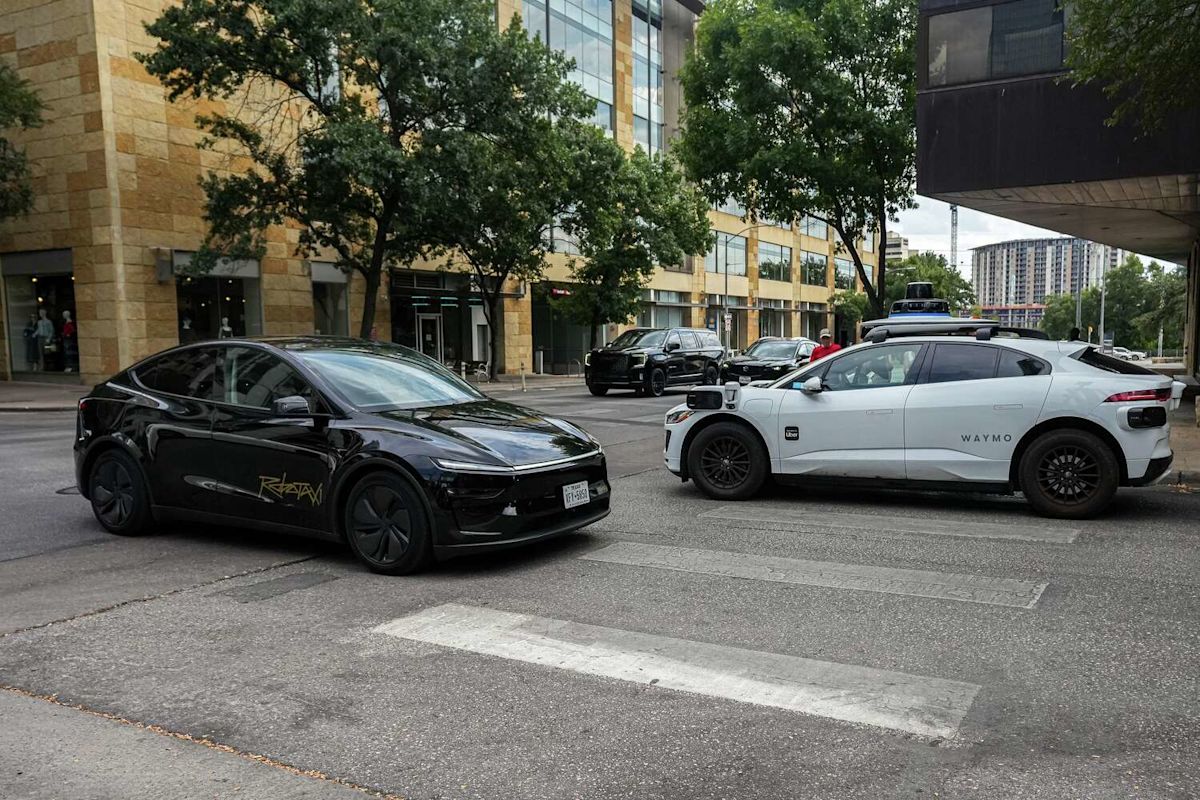
Federal safety data reveals a notable concentration of autonomous vehicle accidents across Texas, with regulators logging 22 robotaxi crashes over a four-week period concluding on August 17. The capital city of Austin served as the focal point for more than a third of those incidents, recording eight collisions during the reporting timeframe as major technology companies continue to scale up their presence on public streets.
The uptick in documented collisions coincides directly with rapid fleet expansion by leading autonomous vehicle operators. Autonomous driving developers have poured hundreds of additional vehicles into Texas municipalities, transforming the state into one of the country's primary testing and commercial deployment grounds for driverless transportation networks.
Tesla Inc. has significantly expanded its footprint in the state as it prepares for the debut of its Cybercab, officially registering more driverless units to elevate its Texas fleet to 439 vehicles. Simultaneously, Waymo, the self-driving unit operating under Google’s parent company Alphabet Inc., has scaled its Texas operations aggressively, deploying nearly 1,000 autonomous vehicles across the state's roadways.
In Austin, the latest four-week wave of federal reporting added to an already extensive history of local autonomous driving incidents. Waymo disclosed five new crashes in the city, which lifted its cumulative local collision count to 135 since June 2025. Tesla documented one additional incident during the same four-week window, bringing its total citywide crash record to 23.
Tesla's newly logged Austin collision occurred when an autonomous vehicle struck a metal bollard alongside a chain fence. Another active operator in the city, Avride, registered one collision during the period to reach a cumulative total of 27 crashes across its local fleet of 344 modified Hyundai Ioniq 5 electric vehicles.
In contrast to its competitors, Zoox, the autonomous ride-hailing subsidiary owned by Amazon Inc., completed the four-week tracking period without any new incident reports. The company has maintained a smaller operational footprint in Austin, managing a fleet of 44 autonomous vehicles that have recorded a total of three collisions since June 2025.
One of the most notable Austin incidents within the period required intervention and review from the Austin Police Department after an electric bicycle rider was injured. The accident resulted in minor injuries to the e-bike rider after coming into contact with an autonomous vehicle operated by Avride.
Details provided in Avride's formal filing to the National Highway Traffic Safety Administration (NHTSA) stated that the cyclist lost control of the e-bike and slid into the side of the autonomous vehicle. The company's incident summary further noted that the cyclist had been moving in the wrong direction on a two-way street prior to losing control.
Waymo’s five newly registered Austin accidents involved varied operational circumstances. The company's filings documented instances where other motorists crossed into the autonomous vehicle's designated lane, one case where a Waymo car sustained undercarriage damage after traversing a sloped parking lot exit, and an event where a commercial garbage truck reversed into a stationary Waymo vehicle.
Beyond the boundaries of Austin, robotaxi activity generated multiple incident reports across other prominent Texas metropolitan regions. During the identical four-week timeframe, municipal roadways in Houston logged four autonomous vehicle collisions, while Dallas and Arlington registered a combined total of 10 crashes.
San Antonio recorded no robotaxi crashes in the latest federal reporting dataset. The absence of incident filings follows the ongoing suspension of Waymo’s local ride-hailing operations, which were halted after one of the company's autonomous cars was swept away by rising floodwaters in April.
The broader statewide incident numbers also incorporated activity from other autonomous vehicle developers operating on Texas roads. Delivery and mobility developer Nuro, alongside autonomous shuttle firm May Mobility—which maintains an active operational partnership with ride-hailing platform Lyft—both contributed to crash tallies alongside Waymo and Avride outside of Austin.
The most severe Texas incident documented in the latest NHTSA records occurred in Dallas, where a crash resulted in the death of 71-year-old pedestrian Juan Guzman. According to Waymo's submission to federal regulators, the autonomous vehicle was slowing down for a pedestrian in the road when a human-operated SUV struck Guzman, violently propelling him into the rear left section of the driverless car.
Guzman was transported from the scene to a local medical facility, where he subsequently died from his injuries. The driver of the human-operated SUV remained at the accident scene to cooperate with authorities, and the Dallas Police Department has announced no arrests or charges as its investigation remains active.
Federal safety records indicate that the Dallas incident stands as the sole autonomous vehicle fatality recorded in Texas since June 2025. Across NHTSA's entire nationwide database during that same timeframe, the only other recorded fatality occurred in Tempe, Arizona, in September, when a motorcycle collided with a decelerating Waymo vehicle before the rider was thrown into traffic and struck by an oncoming passenger car.


(0)