
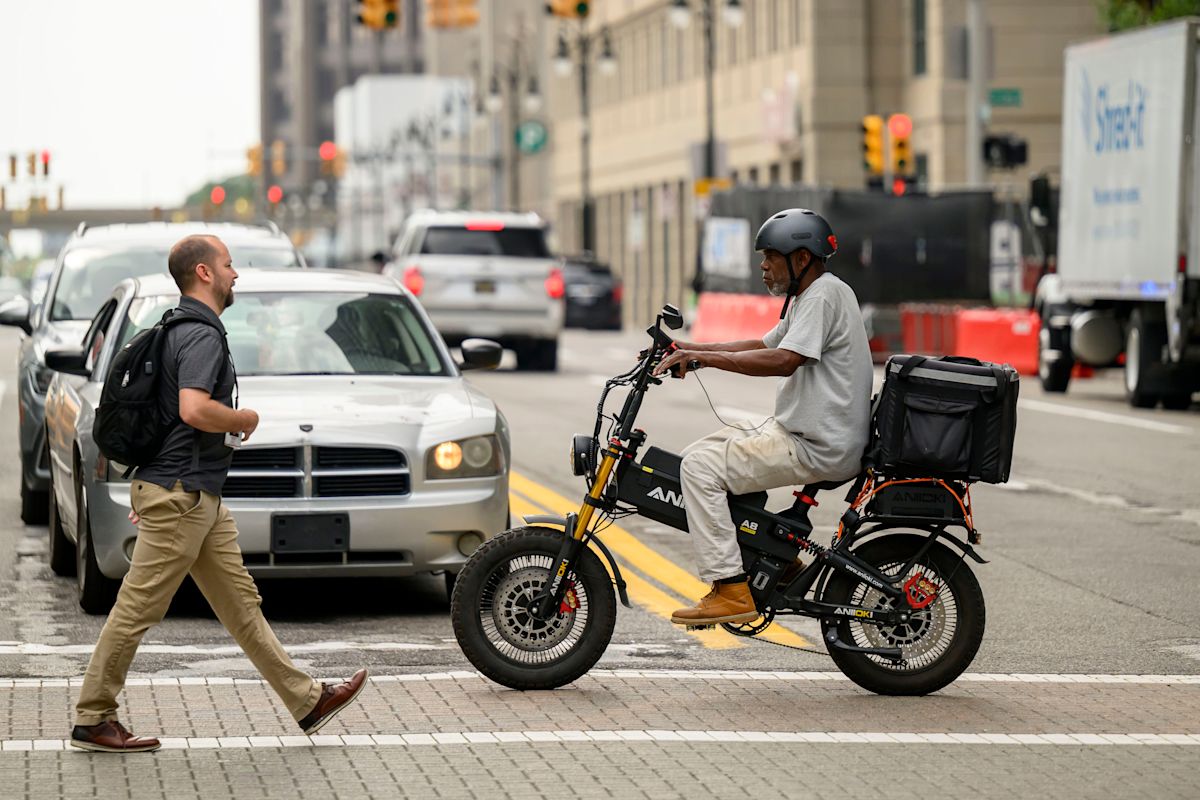
Elected officials in Warren are grappling with mounting public safety concerns regarding the rapid proliferation of high-speed electric bicycles, e-motorcycles, and minibikes on local pathways and neighborhood sidewalks. As these motorized devices gain widespread popularity among young riders, municipal leaders are finding themselves confronted with the difficult task of balancing mobility with pedestrian protection.
During a municipal meeting on Tuesday, the Warren City Council initiated a formal review of the dangers posed by fast-moving personal electric vehicles. Following a substantive discussion regarding the regulatory hurdles and community risks associated with unregulated use, council members voted unanimously to table the matter to allow for further examination and development of potential enforcement frameworks.
The discussion was brought to the forefront by Warren City Council Secretary Mindy Moore, who planned the agenda item to address the escalating presence of electric bikes, e-motos, and minibikes within the community. Moore emphasized that the speed and operation of these motorized machines have created hazardous environments for pedestrians, motorists, and the operators themselves.
However, the council's review revealed tensions within municipal administration over how the issue should be addressed. Moore stated that she had hoped members of the Warren Police Department would attend the meeting to provide critical law enforcement perspectives and data, but she alleged that the department had received directives not to cooperate with the council’s inquiry.
In response to those claims, Warren city spokesperson Clarissa Cayton clarified that the administration had not blocked participation. Cayton stated that no official from the City Council had formally contacted the Mayor’s Office to request a presentation or input from police leadership regarding electric bike operations in the city. Representatives for the police department could not be reached immediately for further comment on the matter.
Despite the procedural friction, council members underscored the urgency of establishing effective oversight. Moore stressed that municipal leaders must thoroughly evaluate how local ordinances can address the machines, though she conceded that determining viable enforcement strategies remains a complex challenge for local authorities.
To curb reckless riding behavior, Moore suggested that the city consider implementing stringent punitive measures. Among the potential enforcement mechanisms discussed were the direct confiscation of non-compliant motorized bikes by law enforcement and the levy of substantial monetary fines against parents whose children operate high-speed devices in ways that endanger the public.
Safety concerns were further reinforced by firsthand accounts from other council members. Councilman Jonathan Lafferty described a recent driving experience where he was traveling at the posted speed limit of 25 miles per hour on a local roadway, only to witness a youth on a minibike blow past his vehicle along the adjacent sidewalk. Lafferty estimated that the minibike was traveling at speeds in excess of 30 miles per hour, noting that the threat of catastrophic physical injury from such encounters is an undeniable reality.
Moore shared similar observations from around the municipality, recalling an incident outside a local business where a group of seven or eight young riders were seen popping wheelies and speeding down public pedestrian walkways on minibikes. She pointed out that the extraordinary acceleration and speed of modern electric devices make them distinctly different from traditional pedal bicycles.
In addition to regulatory enforcement and punitive measures, Moore advocated for preventative educational outreach. She suggested utilizing the Warren Crime Commission to conduct informative sessions in local schools, aiming to educate students and their families about the serious physical and legal risks associated with operating high-powered motorized bikes on public thoroughfares.
Warren’s deliberations reflect a broader regional push across southeast Michigan to rein in dangerous micro-mobility trends. Just one day prior, the Bloomfield Township Board of Trustees approved a six-month moratorium prohibiting individuals under the age of 16 from operating electric bikes and scooters on municipal sidewalks, empowering local police officers to seize and impound devices operated in violation of the temporary ban.
The heightened regulatory scrutiny across the region follows several catastrophic accidents involving youth operating high-speed electric machines. Among the most severe recent incidents was a Labor Day collision in Bloomfield Township that resulted in two 13-year-old boys suffering critical, life-threatening injuries when their electric motos collided with a pickup truck.
The frequency of these severe accidents has also led to a visible response from the legal community. Regional personal injury practices, including the Sam Bernstein Law Firm, have increasingly begun marketing legal services specifically tailored toward representing victims of electric bicycle collisions on Michigan roadways and sidewalks.
The local municipal debates are taking place alongside legislative efforts at the state level in Lansing. Michigan State Sen. Jim Runestad recently introduced a comprehensive legislative proposal designed to establish statewide operational standards and age restrictions for electric bicycles.
Under Runestad’s proposed legislation, minors under the age of 14 would be strictly banned from operating Class 1, Class 2, and Class 3 e-bikes on any public roads, sidewalks, or designated trail systems across Michigan. Furthermore, riders between the ages of 14 and 18 would be legally mandated to wear protective helmets and possess explicit parental supervision or consent to operate the devices.
Runestad emphasized that modern e-bikes must not be treated as harmless toys, pointing out that motorized models capable of reaching speeds between 20 and 30 miles per hour require coordination, experience, and mature judgment that young children often lack. He urged state lawmakers to act proactively to close dangerous gaps in Michigan law before additional preventable tragedies occur in local neighborhoods.


(0)