
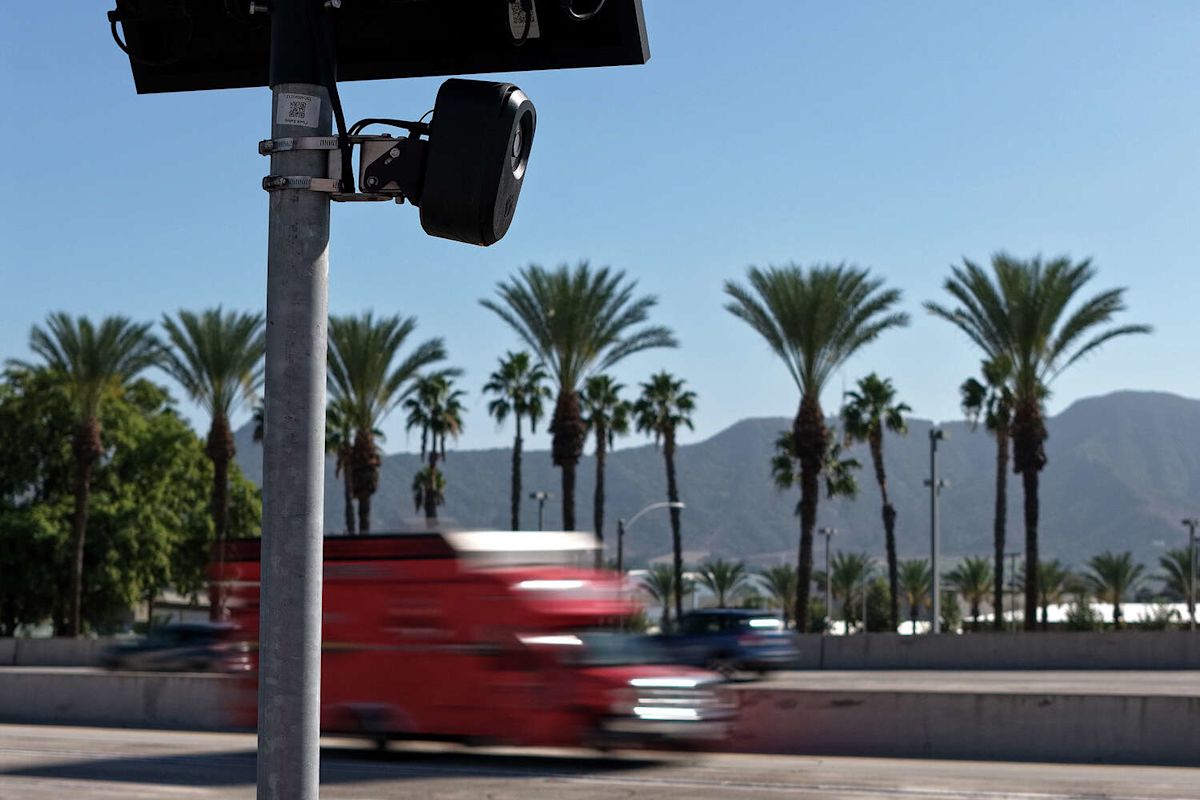
Municipal leaders in the San Francisco Bay Area are reshaping their public surveillance infrastructure by terminating contracts with automated license plate reader vendor Flock Safety. Rather than abandoning vehicular tracking altogether, several local governments are opting to transition their monitoring operations to rival security technology firms, most notably Axon.
The municipal shifts follow prolonged community friction, characterized by mounting demonstrations from local residents, activist groups, and civil liberties organizations. Critics have raised urgent alarms over personal privacy violations and documented abuses involving law enforcement officers using camera databases for unauthorized purposes, such as tracking former romantic partners.
Responses to the public backlash have varied considerably across Northern California jurisdictions. While municipalities such as Santa Cruz and Mountain View chose to dismantle their automated license plate reader programs entirely in response to civic unrest, other cities have chosen to retain the capability by engaging alternative vendors with minimal public fanfare.
A competitive field of enterprise surveillance providers has vied to replace Flock, including Rekor, Genetec, and Motorola Solutions. Among these alternatives, Axon has positioned itself as the leading alternative for law enforcement agencies seeking to maintain network-connected camera deployments while moving away from the Flock brand.
Civil liberties advocates assert that migrating to alternative hardware suppliers does not resolve the underlying constitutional and ethical issues posed by widespread automated surveillance. They contend that shifting to Axon preserves the same systemic intrusions that sparked community resistance against Flock in the first place.
Electronic Frontier Foundation staff attorney Lisa Femia emphasized that both companies design products tailored for blanket vehicular data collection. According to Femia, these camera networks operate indiscriminately, capturing snapshots of every passing motorist regardless of whether there is any underlying suspicion of unlawful conduct.
The automated systems catalog precise geographical coordinates and timestamps alongside license plate digits, vehicle makes, models, and exterior colors. Furthermore, the optical software is engineered to record unique vehicle attributes, including bumper stickers, transforming daily driving habits into searchable law enforcement archives.
Femia summarized the vendor transition as an insubstantial change in practice, likening a city's decision to switch from Flock to Axon to trading one identical consumer brand for another, such as substituting Pepsi for Coca-Cola, without modifying the underlying nature of the surveillance apparatus.
Police administrators continue to offer robust defenses of automated license plate scanning networks, insisting the systems remain vital tools for resolving major criminal investigations. Police officials emphasize that motor vehicles are heavily utilized during the commission of serious offenses, making rapid tracking capabilities indispensable for public safety.
During an Antioch City Council meeting held on August 25, police Lt. Michael Mellone outlined the operational necessity of automated scanning. He explained that after major incidents like armed robberies or shootings, the reader network allows investigators to convert fragmentary witness statements—such as partial license numbers, travel trajectories, or vehicle descriptions—into actionable leads.
Mellone presented local performance metrics to illustrate the technology's effectiveness, reporting that Antioch's deployed Flock cameras had facilitated the recovery of at least 42 stolen automobiles over the preceding year. Those vehicle recoveries subsequently resulted in 23 criminal arrests by local law enforcement officers.
Despite the articulated benefits, political deliberations revealed deep tensions surrounding community surveillance. Antioch Council Member Tamisha Torres-Walker acknowledged widespread public apprehensions regarding mass data gathering, privacy infringements, and threats to civil liberties, expressing an explicit desire to remove Flock technology from the municipality.
Notwithstanding those stated reservations, Torres-Walker joined the rest of the Antioch City Council in voting to approve a $660,000, four-year municipal contract to deploy Axon's license plate reader systems across the city.
A similar procurement strategy unfolded in the neighboring city of Hayward, where local officials authorized a substantial five-year agreement with Axon valued at $2.9 million. Neither Axon corporate representatives, Council Member Torres-Walker, nor Hayward's municipal communications staff responded to formal requests for comment regarding the transactions.
Academic assessments of automated license plate reader effectiveness reveal a complicated picture of their overall utility. Ian Adams, a University of South Carolina policing researcher and study co-author, noted that empirical findings frequently frustrate advocates on both extremes of the technological debate.
According to Adams' research, while the hardware demonstrates clear success in recovering stolen vehicles because it is specifically tailored to recognize and trace automobiles, empirical data shows far less evidence that the technology makes a significant impact on resolving other categories of criminal offenses.


(0)