
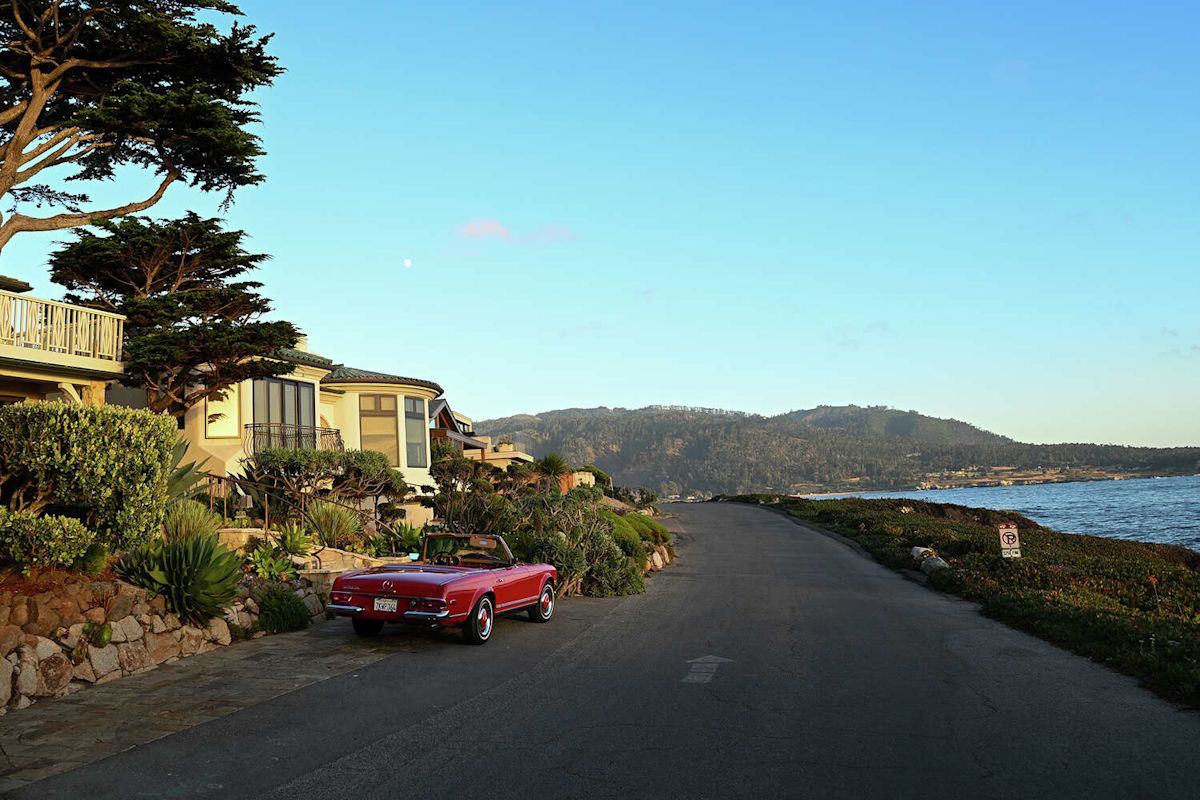
For more than a century, the picturesque coastal enclave of Carmel-by-the-Sea, California, stood apart from nearly every other municipality in the nation by refusing to assign numerical street addresses to its homes and commercial buildings. That long-standing tradition has now officially come to an end, as the seaside community rolls out physical house numbers across its tranquil, tree-shaded avenues.
The visible transformation of this storybook beachfront village is now fully underway. Numerical markers are appearing on storefronts, historic cottages, and municipal facilities. Marking a major milestone in this transition, Carmel’s City Hall was recently fitted with its own brand-new identifying digits, formally establishing its location at 662 Monte Verde St. after generations operating without a standard street number.
For decades, Carmel has cultivated a distinct civic identity rooted in what it chooses not to do. City leaders and residents have routinely rejected standard urban conventions to protect the town’s character, limiting building heights to shield the coastal tree canopy, preserving historic architecture rather than demolishing it, and keeping longstanding local eccentricities intact, such as a historic ban on wearing high heels without a permit.
This aversion to conventional municipal standardization dates back to the town’s incorporation in 1916. At the time, Carmel was a tight-knit colony favored by artists, poets, and writers who viewed numbered addresses as an unnecessary bureaucratic imposition. They favored an organic, pedestrian-focused layout that matched the community's rustic, bohemian spirit.
Rather than relying on numbers, property owners embraced descriptive identifiers. The local government eventually codified this method into the city’s municipal code, decreeing that residences and commercial parcels must be officially identified based on their location relative to the nearest cross-street intersection, as determined by the community planning and building department.
In place of standard numbers, residents bestowed whimsical, punny, and literary monikers upon their cottages. Famous names such as "Sandy Pause" and "A Turn of Fraise" emerged, adding to the village’s storybook allure. For much of the twentieth century, as the community expanded modestly, this navigational quirk served the town well and reinforced its distinctive sense of place.
However, the arrival of the twenty-first century brought practical challenges that the old cross-street system was ill-equipped to handle. The rapid growth of modern delivery services meant couriers unfamiliar with Carmel's layout frequently found themselves circling narrow roads, perplexed by descriptions that offered only relative approximations of a destination.
More critically, municipal leaders and residents began confronting severe public safety concerns. Emergency medical technicians, firefighters, and police officers—even those with deep familiarity with the town's geography—regularly encountered difficulties pinpointing the exact sites of urgent 911 calls, turning minor navigational confusion into potentially life-threatening delays.
The push for reform gained momentum during the mayoral campaign of Dale Byrne. At a neighborhood backyard gathering roughly two years ago, Byrne was repeatedly questioned by residents who demanded to know how he intended to address the growing safety hazards posed by the absence of house numbers. The issue quickly emerged as a central focus of his candidacy.
Following his election, Mayor Byrne oversaw a series of public forums and community discussions to gauge local sentiment, while taking care not to unilaterally dictate the outcome. Recognizing the deep divide between traditionalists and safety advocates, the city embarked on an extensive review process to evaluate the real-world consequences of the missing addresses.
As part of his research, Byrne consulted directly with local first responders, reviewing dispatch records and interviewing personnel at the fire and police departments. The findings revealed persistent, troubling obstacles that emergency crews faced while attempting to navigate to distress calls under high-stakes circumstances.
One particular incident underscored the urgency of the problem. Emergency responders were dispatched to assist a resident suffering a heart attack on a particularly challenging street. Firefighters were forced to park their engine and search door-to-door along the roadway in an effort to locate the patient requiring medical intervention.
While fire personnel searched on foot, a responding police officer in a patrol car managed to locate the distressed individual. Fire rescue crews arrived approximately ten minutes later to administer life-saving care, highlighting a terrifying lapse of time that could have easily turned fatal under different conditions.
Faced with mounting evidence and growing pressure from an active majority of residents, the Carmel City Council voted last October to formally abolish the historic non-address system. The decision cemented Carmel’s status as the final incorporated city in the United States to adopt standard numerical addressing.
The transition represents a delicate compromise between honoring the past and safeguarding the future. While the historic cottage names and cross-street descriptions will remain treasured components of the town's artistic legacy, the introduction of standardized numbers ensures that critical services can find residents when seconds count.
With physical numbers now taking their place on structures throughout the village, Carmel-by-the-Sea steps into modern alignment with the rest of the nation, closing a 110-year chapter of navigational eccentricity in favor of resident safety and contemporary reliability.





(0)