
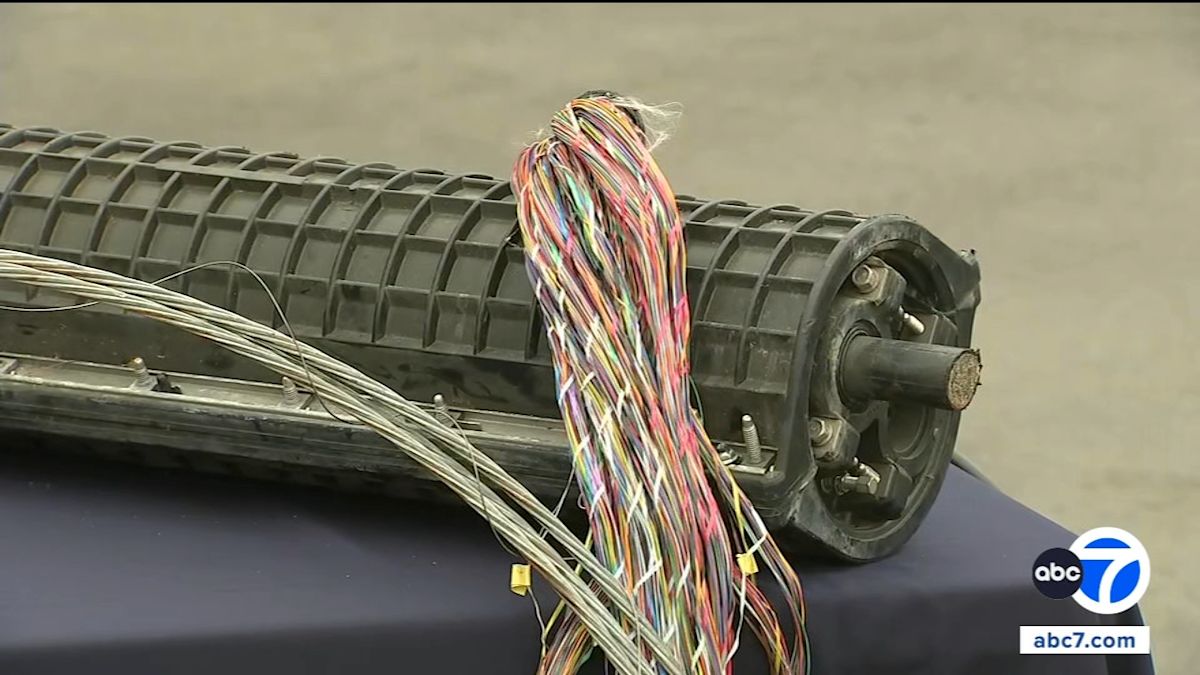
A broad coalition of municipal leaders, law enforcement agencies, and business representatives is intensifying pressure on California Governor Gavin Newsom to enact legislation designed to crack down on organized metal theft rings. The concerted push comes as municipal infrastructure across the state faces continuous disruptions, with brazen scrap metal thieves cutting communication networks and leaving vital roadways cloaked in darkness.
The sheer magnitude of the ongoing crisis has been brought into sharp focus by recently disclosed utility figures obtained through public records requests by 7 On Your Side Investigates. According to the records, more than 27,000 feet of communications cable have been stripped and stolen from the Los Angeles Department of Water and Power over the past year alone.
To illustrate the immense scope of the missing material, the stolen utility lines equate to roughly five miles of cable. If positioned vertically, that length would match the typical cruising altitude of a commercial passenger jet. Laid horizontally end to end, the stolen wiring would span approximately 90 standard football fields or stretch across 165 Olympic-sized swimming pools.
The widespread removal of these vital metallic components has caused serious and recurring fallout for residents throughout Los Angeles and several other Californian municipalities. Thieves hunting for valuable copper and other scrap metals have severed critical phone lines, disrupted public utility networks, and rendered extensive networks of municipal streetlights nonfunctional.
In response to the mounting damage, civic officials gathered on Monday to formally call upon Governor Newsom to sign Assembly Bill 1941 into law. The pending legislative measure aims to establish stricter statutory mechanisms to combat the coordinated networks driving the lucrative illicit trade.
Under the framework of AB 1941, state law would establish a distinct criminal offense officially classified as "organized metal theft." This new charge is specifically tailored to address the collaborative and systemic nature of groups that coordinate the harvesting and distribution of public infrastructure materials.
The bill establishes concrete criminal consequences for individuals and groups caught participating in these coordinated operations. Under the proposed statutory guidelines, any individuals who team up to unlawfully dismantle, steal, or purchase illicitly obtained metal could face criminal penalties including up to one full year of incarceration in jail.
The author and primary sponsor of the legislation, Assembly Member Mark González, represents portions of Los Angeles and has taken a prominent role in advocating for robust preventative solutions. González stressed that municipal and state infrastructure must no longer be treated as an easy target for criminal syndicates seeking quick financial payouts.
Speaking on the urgent necessity of enacting the reform, González underscored the need to equip the legal system with more effective mechanisms. He pointed out that the bill provides prosecutors with a much stronger legal tool to hold organized theft rings accountable, while simultaneously safeguarding the critical public systems that ensure communities remain safe, functional, and interconnected.
Highlighting the physical realities of the problem, González held his press conference at a location that has become an epicenter of infrastructure vandalism: the iconic 6th Street Bridge in Los Angeles. The major thoroughfare has been repeatedly targeted and dismantled by thieves seeking scrap materials from its electrical framework.
The recurrent thefts along the 6th Street Bridge have carried immediate safety consequences for motorists, pedestrians, and surrounding neighborhoods. When wire thieves repeatedly rip out the internal electrical wiring powering the bridge's illumination systems, the entire structure is frequently plunged into complete darkness after sunset.
Beyond the safety hazards, the financial toll inflicted on local taxpayers has reached staggering proportions. According to figures shared by González, public coffers have already expended an estimated $11 million solely to replace the communications and electrical cables stripped from the 6th Street Bridge structure.
Local authorities and business leaders argue that creating dedicated penalties for organized metal theft is essential not only to punish frontline thieves, but also to dismantle the broader economic pipeline that incentivizes the buying and selling of stolen public property. By holding both perpetrators and illicit buyers criminally liable, proponents believe the law will curb the financial incentives driving the destructive enterprise.
The coalition warning Newsom emphasizes that until stronger deterrents are established in the penal code, public utility providers like the Los Angeles Department of Water and Power will remain vulnerable to massive property losses that endanger public safety and siphon millions of dollars from municipal budgets.
With the state legislature having completed its review and passage of AB 1941, the final decision on whether to establish the new criminal classification now rests entirely on Governor Gavin Newsom's desk, where the measure currently awaits his executive signature.





(0)