
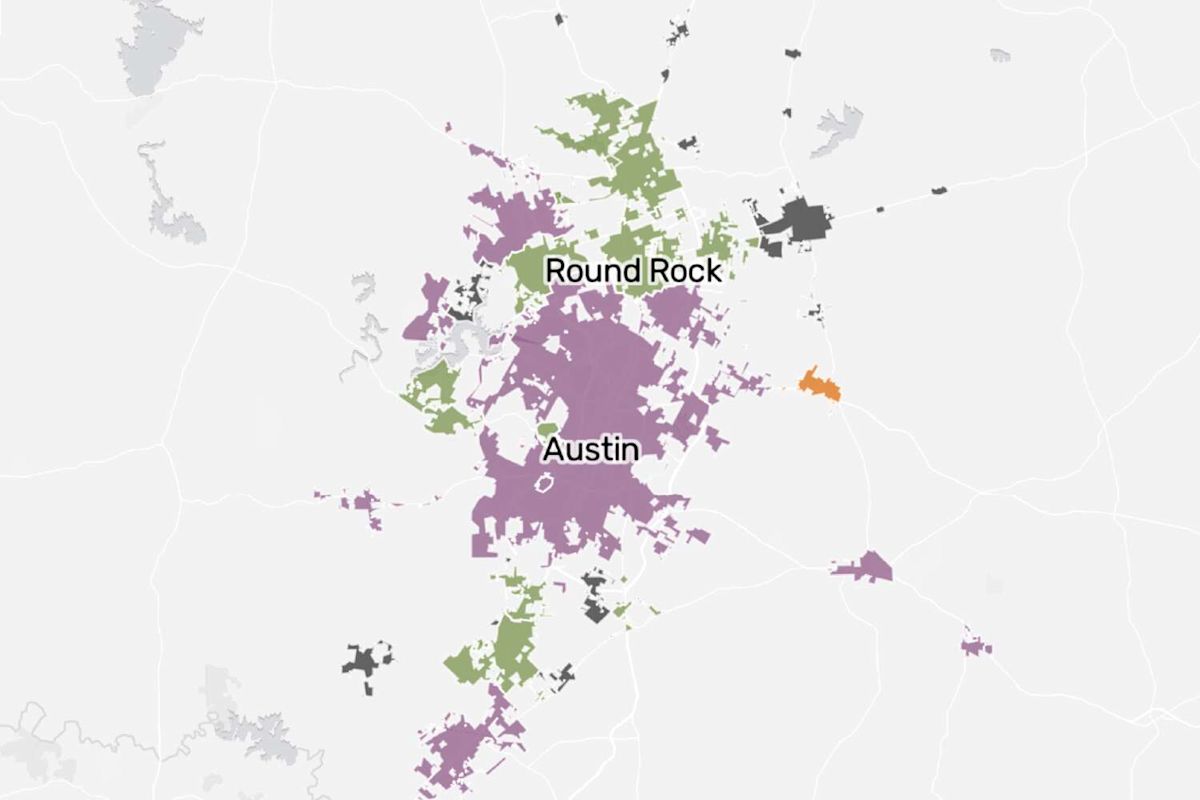
Across Central Texas, local governments are increasingly fractured over the adoption, maintenance, and regulation of automated license plate reader technology. While some communities continue to view the digital surveillance systems as vital tools for combating crime, a wave of recent contract cancellations and program suspensions reflects mounting public anxiety over privacy and government overreach.
The shifting regional stance was highlighted in a comprehensive review by the Austin American-Statesman, which analyzed public documents, city actions, and municipal records across Travis, Williamson, Hays, and Bastrop counties. The inquiry examined how local police departments interface with license plate tracking cameras, particularly those supplied by Atlanta-based vendor Flock Safety, which has found itself at the center of a nationwide debate.
According to the findings, the region is currently split down the middle. Nine municipalities report that they are actively operating automated license plate reader systems to monitor vehicular traffic within their borders. These jurisdictions include Bee Cave, Buda, Cedar Park, Georgetown, Hutto, Lakeway, Mustang Ridge, Round Rock, and West Lake Hills, where law enforcement officials continue to rely on the network to track vehicle movements.
Conversely, another nine Central Texas cities have moved in the opposite direction by formally canceling their vendor agreements. Municipalities that have terminated their automated license plate reader contracts include Austin, Bastrop, Lago Vista, Leander, Liberty Hill, Manor, Pflugerville, San Marcos, and Sunset Valley. In addition to these cancellations, the city of Elgin chose to temporarily pause its camera program rather than immediately terminate it.
Meanwhile, three other municipalities—Dripping Springs, Rollingwood, and Smithville—have indicated that they do not use the surveillance technology at all. The operational status in several smaller communities remains unconfirmed, as representatives in Bartlett, Coupland, Creedmoor, Florence, Granger, Jarrell, Jonestown, Taylor, Thorndale, Thrall, Weir, and Wimberley did not provide responses to questions regarding whether camera systems are active in their jurisdictions.
The momentum against automated license plate readers accelerated significantly late this summer following a pivotal vote in Pflugerville. On August 25, the Pflugerville City Council decided to cancel its contract with Flock after a resident filed a formal request to inspect data audit logs, seeking to uncover which external law enforcement agencies had been querying information captured by the city’s roadside cameras.
The Pflugerville decision triggered a rapid domino effect across neighboring communities. Officials in Bastrop, Elgin, Manor, and Leander quickly took steps to reassess, pause, or end their respective contractual relationships. In Bastrop, city leaders went a step further, with the City Council voting not only to drop its vendor contract but also to enact a sweeping prohibition against the use of automated license plate reader technology altogether.
The growing scrutiny surrounding automated license plate readers has also garnered decisive intervention at the highest levels of state government. Texas Governor Greg Abbott issued a directive instructing all state agencies to halt expenditure on Flock cameras, casting further administrative and political uncertainty over the future of the technology statewide.
While several neighboring councils moved swiftly to terminate their systems, the Kyle City Council adopted a different strategy. During a meeting on September 5, Kyle officials declined to scrap the city’s ongoing agreement with Flock. Rather than ending the program outright, council members agreed to consider placing a nonbinding measure on the May 2027 municipal ballot, allowing local voters to weigh in directly on whether the camera network should remain in operation.
In Austin, the dynamic surrounding the technology has presented a unique regulatory gray area. The Austin Police Department no longer maintains direct access to a dedicated automated license plate reader database following the expiration of the city's Flock contract in 2025. However, the end of that formal agreement did not entirely remove access to camera-generated leads.
Austin police officers are still able to receive license plate tracking information through secondary communications with external partner agencies that retain legitimate access to the system. Because the city lacks written protocols or tracking mechanisms to document these informal exchanges, questions have emerged regarding how often outside data is retrieved and whether Austin's broader municipal surveillance oversight policies are effectively applied.
Advocates of automated license plate readers contend that the network is an indispensable tool for modern policing. Law enforcement agencies assert that real-time license plate detection plays a critical role in recovering stolen automobiles, locating missing persons, identifying abducted children, and tracking down criminal suspects who might otherwise evade detection on regional roadways.
Critics and digital rights advocates, however, argue that maintaining vast, searchable repositories of vehicle locations amounts to mass surveillance. Privacy advocates have voiced serious alarm over data retention practices and the ease with which records can be shared across multiple law enforcement entities without clear judicial oversight, arguing that the system tracks the lawful movements of innocent drivers without reasonable suspicion.
As city leaders throughout Central Texas continue to balance operational police demands against constitutional privacy concerns, the regional map remains a patchwork of contrasting policies. With public referendums on the horizon and state directives halting new spending, the future role of automated vehicular surveillance in the area remains deeply contested.


(0)