
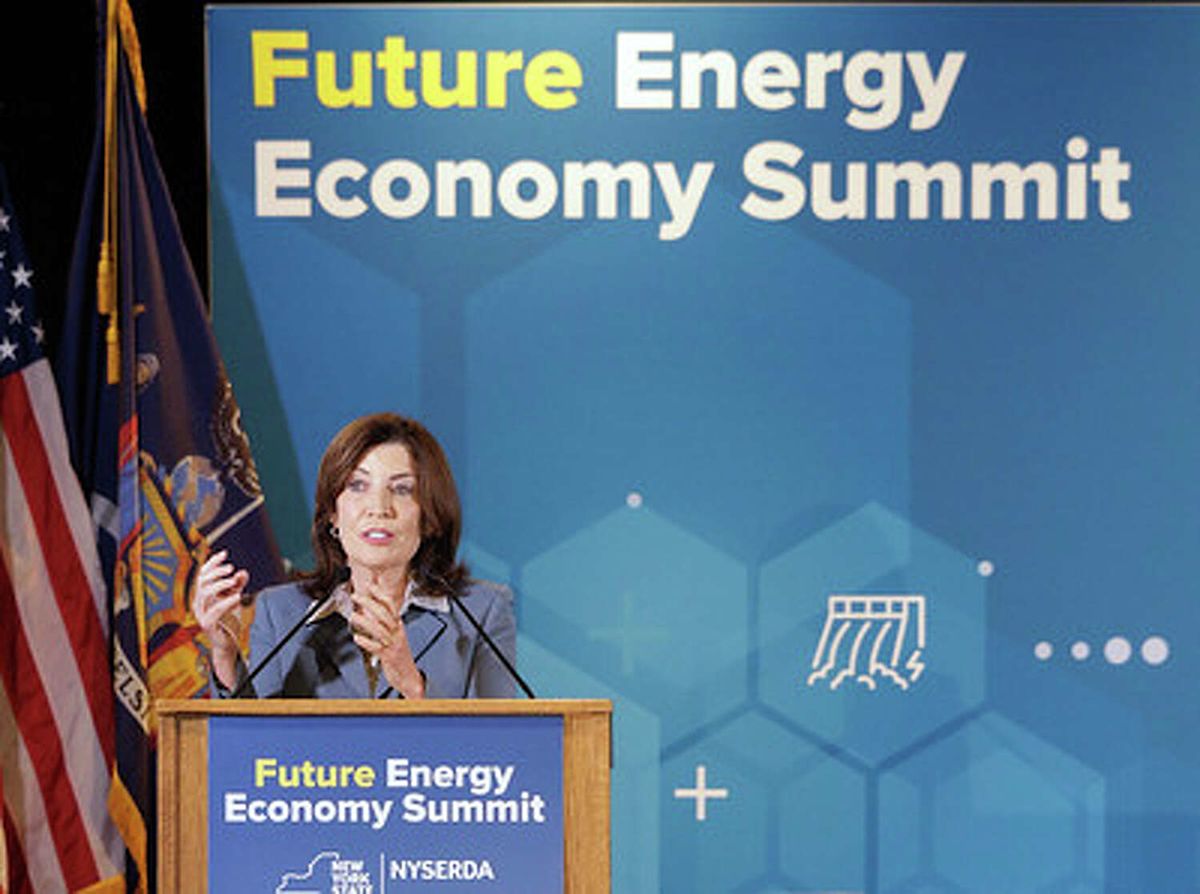
Millions of New York residents are scheduled to receive financial assistance in the coming weeks as Gov. Kathy Hochul’s administration prepares to distribute direct energy rebate checks worth up to $200. The payments, directed to more than eight million qualifying households across the state, are intended to provide economic relief against mounting residential power bills and elevated fuel costs.
Beginning on September 21, the New York State Department of Taxation and Finance will commence mailing the checks, with the distribution process expected to continue through December. Eligible taxpayers will not need to complete a separate application process to obtain the funds, as the state will automatically determine qualification based on previously submitted tax filings.
The program is backed by a $1 billion allocation established in the enacted state budget for fiscal year 2027. Under the funding framework, payment tiers are determined according to tax filing status and reported annual earnings. Married couples filing jointly with an adjusted gross income below $150,000 will be issued the highest available rebate of $200.
For joint tax filers reporting annual earnings between $150,000 and $300,000, the state will issue payments of $150. Meanwhile, individual taxpayers filing singly with an annual income below $150,000 are set to receive a $100 rebate.
To qualify for the disbursements, individuals or married couples must have submitted their 2024 New York State personal income tax returns on time and maintained full-time state residency during that tax year. In addition, recipients must meet the established income criteria and must not have been claimed as a dependent on another individual's tax filing.
Gov. Hochul framed the financial relief as a fundamental element of her administration’s broader affordability agenda. She pointed to the mounting pressure that working families encounter when managing monthly electricity expenses and retail gasoline prices, while directing blame toward congressional Republicans for broader national cost increases affecting consumer utilities, fuel, and food staples.
The initiative marks the second consecutive year that state leadership has sent direct relief payments to taxpayers in the late summer and autumn ahead of general elections. During the prior legislative cycle, Hochul and lawmakers authorized what were termed "inflation refund checks," which provided payments of up to $400 to the same income demographic.
Administration officials stated that the upcoming check distribution is part of a sustained commitment to cushioning utility costs across the state. According to figures provided by the executive chamber, New York has directed roughly $7.6 billion toward participating households in direct utility assistance and energy-related rebates since 2021.
The rebate rollout comes amid persistent concern regarding the cost of residential power throughout New York. An analysis published in April by the Empire Center for Public Policy, an Albany-based non-partisan research organization, utilized Energy Information Administration data to show that the state's average residential electricity rates exceed the nationwide average by approximately 70 percent.
The Empire Center's findings revealed that New York residents pay roughly 29.99 cents per kilowatt-hour for electricity, compared to the national average of 17.6 cents. This pricing structure leaves New Yorkers paying 50 percent more for power than residents in neighboring Pennsylvania, and nearly twice the rates recorded in states such as Texas and Florida.
In addition to home electricity expenses, the governor’s office cited escalating transportation fuel prices as a primary reason for issuing the rebates. Administration officials noted that retail gasoline prices in New York have climbed to roughly $4.35 per gallon, which represents a 45 percent increase attributed to geopolitical disruptions from the war in Iran.
State Department of Taxation and Finance Commissioner Amanda Hiller expressed support for the initiative, noting that the power checks represent a practical mechanism for the administration to deliver meaningful economic assistance to residents navigating demanding fiscal circumstances.
Despite the administration's stated goals, the timing and structure of the checks have drawn sharp criticism from political opponents. Critics within the state Republican Party have characterized the payments as an election-season tactic designed to gain voter support rather than a sustainable resolution to structural challenges like high taxes, energy mandates, and inflation.
Skepticism over the strategy has also emerged from within Hochul's own party. Lt. Gov. Antonio Delgado, who launched and subsequently dropped a primary campaign against Hochul earlier this year, previously labeled the prior round of refund checks as political theater that failed to provide a genuine solution. Delgado argued that one-time disbursements mask deeper structural issues and advocated instead for long-term investments in housing, healthcare, and childcare.
Assembly Minority Leader Ed Ra similarly criticized the timing, stating that sending checks less than two months prior to an election serves as an effort to secure political goodwill rather than resolve systemic issues. Ra argued that while families need fiscal relief, a $200 check provides limited help against electricity rates far above the national average and fails to improve power grid reliability or reverse state-level energy cost trajectories.
While many Republican lawmakers in the Legislature had previously supported rebate concepts when proposed as part of a wider legislative energy strategy, they continue to challenge the executive branch's overarching regulatory framework. Hochul’s office maintained that the fiscal year 2027 state budget actively rewrites regulatory guidelines to protect household finances and prioritize everyday families over large energy corporations.


(0)