
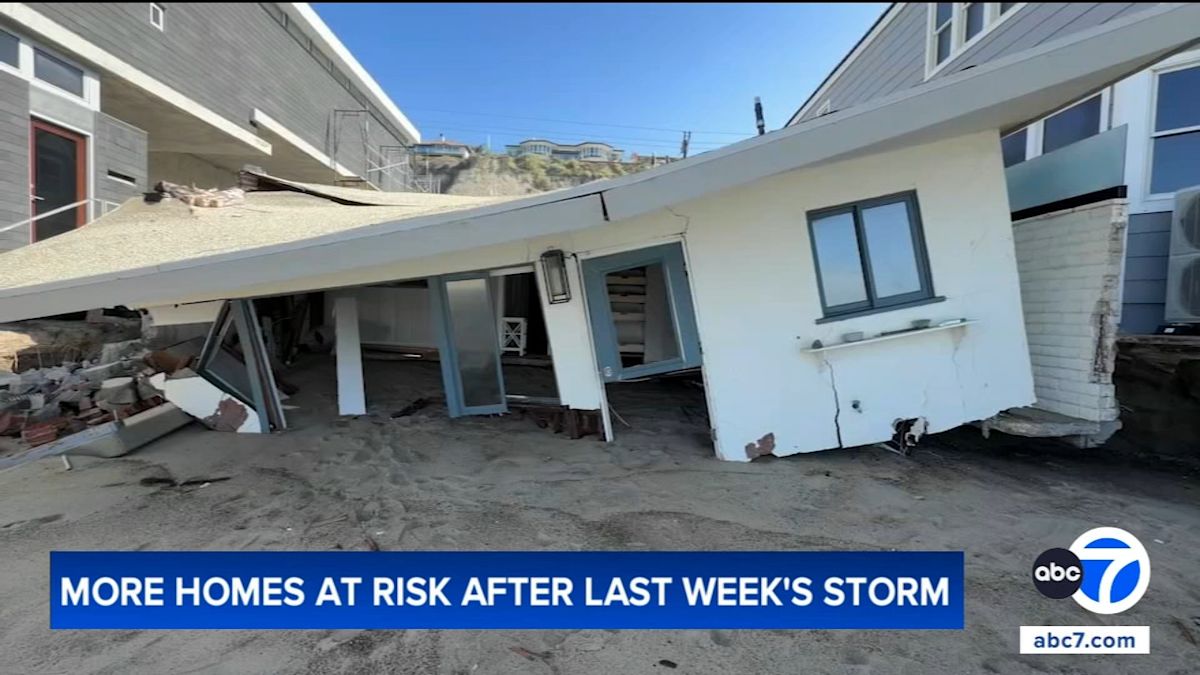
Coastal erosion and relentless ocean surf have triggered a deepening crisis along the shoreline of Capistrano Beach, where multiple residential properties are now facing catastrophic collapse following recent severe weather. Local officials have stepped in to declare a municipal state of emergency as oceanfront houses continue to succumb to the encroaching tides.
In the latest wave of structural failures, another oceanfront house began sinking directly into the sea, highlighting the ongoing vulnerability of the neighborhood. The escalating hazard prompted municipal inspectors in the city of Dana Point to mark 10 properties along Beach Road with red tags, officially deeming them unsafe for occupancy, while issuing yellow tags to an additional seven residences facing potential structural instability.
The present disaster stems from the powerful ocean swells generated by Hurricane Marie. Although the peak wave activity from the tropical system has dissipated, the physical destruction along the coastline has not ceased, with compromised foundations and undermined shorelines continuing to give way well after the storm's departure.
Among the most heavily impacted property owners are Beach Road residents Amy and Chris Rogers, who have watched their home suffer severe and irreversible damage. The relentless sea completely swept away their rear outdoor deck, leaving their interior kitchen dangerously exposed directly over the open waters of the Pacific Ocean.
The couple shared the immense emotional toll that the ongoing disaster has inflicted upon them and their neighbors. Describing their journey through the stages of grief over a four-day span, they noted that the initial shock and tears have gradually transformed into profound frustration, particularly because they believe the widespread destruction of their neighborhood could have been prevented.
A major source of growing outrage among local residents is what they perceive as an absolute void of institutional relief efforts. According to the Rogers, property owners along the strip have received no meaningful logistical, physical, or financial assistance from local, county, state, or federal authorities, leaving them to confront collapsing properties without organized public support or emergency equipment.
In response to the worsening disaster along Beach Road, the city of Dana Point moved forward with declaring a local state of emergency. However, homeowners maintain that municipal declarations have done little to stop the immediate physical loss of properties, reporting that neighbors are desperately trying to preserve what remains of their houses while running into obstacles at every step.
Frustrated residents argue that restrictive coastal oversight and bureaucratic delays have historically prevented them from taking proactive measures to safeguard their properties from destructive wave action. This issue has been exacerbated by the rapid disappearance of natural shoreline sand, which has washed away in large quantities due to a lack of regular sand nourishment and replenishment initiatives.
Addressing the immediate threat, a spokesperson for the California Coastal Commission confirmed that the state regulatory agency has approved emergency permit applications for 17 oceanfront properties. These temporary permits permit homeowners to install coastal armoring measures, including the strategic placement of large protective boulders along the threatened shore.
Despite the issuance of these authorizations, residents have strongly criticized the burdensome conditions attached to the emergency permitting process. Homeowners must mail in a $1,600 fee simply to receive permission for temporary fortifications that are valid for only 120 days, after which regulatory mandates require the complete removal of all installed protective materials.
The California Coastal Commission has defended strict regulations on hard shoreline barriers by pointing out that artificial armoring and boulder seawalls frequently accelerate coastal erosion and degrade public beach access. The Rogers acknowledged the validity of this ecological assessment, noting that hard defenses are an imperfect measure that neither regulators nor homeowners ultimately prefer.
Rather than relying on temporary rock barriers that must eventually be dismantled, community members are advocating for permanent, sustainable coastal management practices. Residents stress that regular, comprehensive beach sand nourishment projects represent the most effective and environmentally sound method for preserving both private homes and the public shoreline.
The expanding crisis has also drawn attention from state lawmakers representing the vulnerable coastline. A spokesperson for Assemblywoman Laurie Davies confirmed that legislative efforts are underway to convince Governor Gavin Newsom to declare a comprehensive State of Emergency for the entire coastal zone, a move that could potentially unlock broader relief mechanisms.
For homeowners like Amy and Chris Rogers, the immediate path forward remains clouded with uncertainty as they await assessments from their insurance providers. The impending determinations will decide whether salvage operations and structural repairs are viable, or if the damaged residence must be fully torn down so the owners can attempt to rebuild from scratch.


(0)