
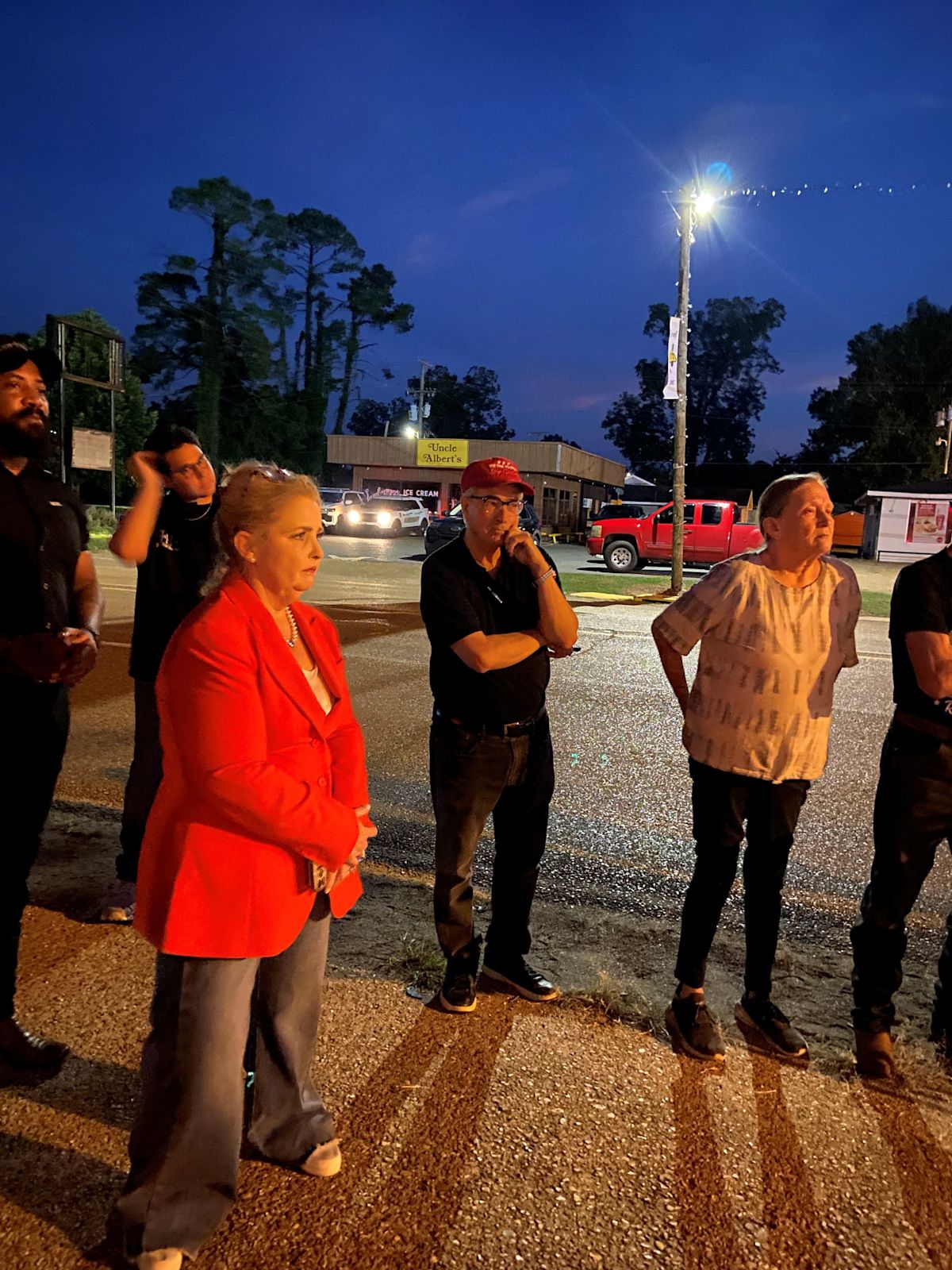
Residents in Central Louisiana are voicing escalating frustration over the rapid development of massive artificial intelligence infrastructure, arguing that local populations are being completely sidelined from pivotal planning processes. The controversy took center stage on a Saturday evening in Boyce, where community members gathered in a parking lot to attend a stop on the national "AI Data Center Revolt" tour.
The grassroots event was headlined by Amy Kremer, chair of the conservative advocacy group Humans First. Kremer made it clear to the assembled audience that her organization is not inherently opposed to technological progress or artificial intelligence itself. Instead, she asserted that the core issue is whether municipal residents retain the democratic right to decide if such massive commercial facilities should be established within their neighborhoods.
During her address, Kremer highlighted what she described as an unfair imbalance in the development of contemporary technology. She emphasized that advanced artificial intelligence systems have been constructed utilizing American data, land, domestic resources, energy, and frequently taxpayer funding. Despite these foundational contributions from the public, Kremer argued that everyday citizens have been denied a meaningful voice or a seat at the decision-making table regarding how the emerging technology affects current living conditions and future societal outcomes.
Kremer forcefully characterized the current rollout of tech infrastructure as an imposition on rural and suburban communities. She maintained that outside corporations are aggressively pushing massive industrial footprints onto local towns without genuine public consent. For Kremer, allowing corporate entities to dictate local landscape changes without citizen approval represents a fundamental overreach.
Humans First, which describes its mission as advocating for an "America First AI policy," explicitly rejects calling for blanket federal or statewide moratoriums against data center construction. Kremer explained to the applauding crowd that the organization stands firmly on the principle of local control. Under this framework, if a community genuinely desires a data facility, voters should possess the authority to elect municipal leaders who will permit, approve, and oversee the buildout through standard civic processes.
The Boyce gathering served as the second official stop on the AI Data Center Revolt tour, which commenced in Dallas during a mini Republican convention. Following an appearance in Austin, Texas, the organizers brought their campaign to Rapides Parish before moving on to subsequent host cities. The national tour is scheduled to culminate with a final presentation in Washington, D.C., on September 16.
Boyce became a focal point for the advocacy tour due to the ongoing construction of Data Forge 1, a colossal $3.6 billion AI factory data center. Situated on former agricultural land just outside the town, the expansive commercial project is being developed by Applied Digital, an enterprise based in Dallas. The scale of the development has turned the small Louisiana community into a flashpoint for debates surrounding technological infrastructure.
Tensions regarding Data Forge 1 have been building for months. In June, a public meeting was held in Boyce featuring corporate representatives from Applied Digital, officials from the regional economic development organization Louisiana Central, and delegates from electric utility Cleco. While project promoters outlined the operational mechanics and argued for potential economic benefits to Rapides Parish, the outreach effort was met with widespread skepticism by local attendees.
The public apprehension was echoed during Saturday's parking lot gathering by local leaders, including Gary Musgrove. Musgrove serves as the president of Save My Louisiana, a grassroots entity initially founded in 2025 to oppose regional carbon capture and sequestration initiatives. The organization has since turned its scrutiny toward the Applied Digital project due to compounding worries regarding local resources and property rights.
Musgrove directed much of his attention to the substantial electrical requirements needed to power the upcoming facility. Utility provider Cleco has entered into a contract to supply 430 megawatts of electric power to Data Forge 1. Musgrove pointed out that this single commitment constitutes approximately 25 percent of Cleco’s total generation capacity, an amount of energy comparable to the electricity required to power 250,000 individual residential households.
The sheer magnitude of this energy demand has raised urgent questions regarding the local utility grid's capacity. Musgrove expressed deep skepticism regarding where Cleco intends to procure this massive volume of power without straining existing services. He expressed concern that authorities or utility entities might resort to eminent domain to expropriate surrounding private land in order to construct additional grid infrastructure, noting that while expropriation has not yet occurred, property rights remain a core worry for his group.
Musgrove also referenced public statements made by President Donald Trump regarding the data sector. Trump has noted that municipalities resisting data center projects risk missing out on valuable economic development, while emphasizing that such facilities will ultimately need to supply their own power generation. In light of those observations, Musgrove questioned whether the Boyce facility would compensate for any electric shortfall by operating up to 196 industrial generators on-site, a scenario that could subject the surrounding rural community to relentless operational noise.
According to Musgrove, when concerned residents attempted to seek clarification about these power generation strategies and operational safeguards during the June public forum, company representatives declined to provide answers, claiming the specifics were proprietary business information. The lack of transparent responses has only heightened regional resistance and fueled suspicion among property owners and workers.
The parking lot demonstration drew a diverse cross-section of attendees from across Central Louisiana, including attorney Ed Tarpley, who stood alongside Kremer, as well as Dustin McAnn, a rancher and educator who lives in neighboring LaSalle Parish while working in Rapides Parish. As the Humans First bus departed Boyce to continue its journey to the nation's capital, local residents remained steadfast in demanding that their voices be heard before tech conglomerates permanently reshape their communities.





(0)