
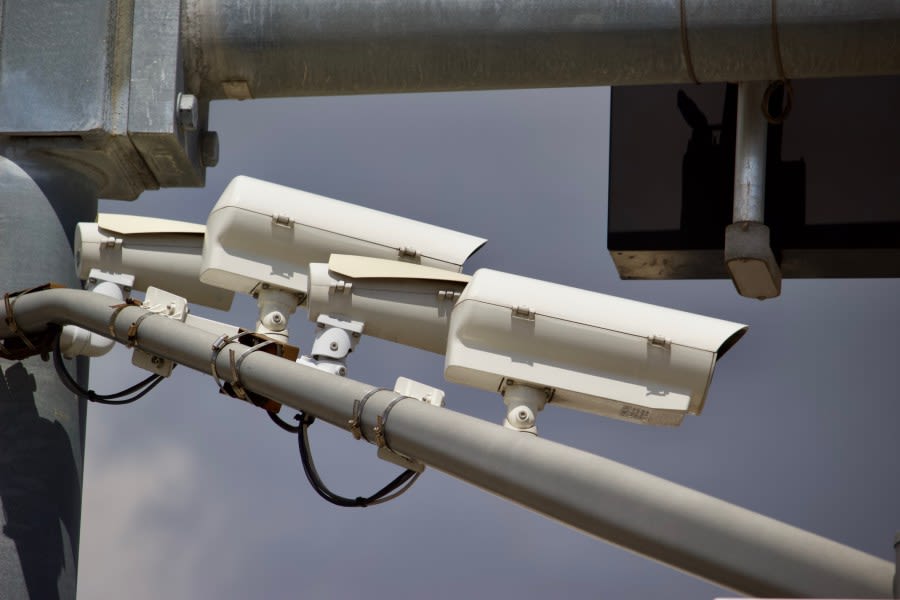
The Louisville Metro Police Department has introduced a comprehensive set of stricter guidelines governing the use of automated license plate readers throughout Kentucky’s largest city. Department officials announced the updated framework to ensure that the surveillance network is utilized solely for legitimate and thoroughly documented public safety operations.
Automated license plate readers, widely referred to across the region as Flock cameras after the primary technology vendor Flock Safety, automatically record images of vehicles traversing public roadways. The specialized systems capture key vehicular data—including registration plates, make, model, and color—and index the findings into an easily searchable digital database accessible to law enforcement.
According to LMPD Deputy Chief Emily McKinley, the camera network serves as an essential investigative mechanism that allows detectives to rapidly identify vehicles linked to major criminal investigations. The automated software also generates instant alerts when a stolen automobile or a vehicle associated with an active warrant passes by a sensor.
Addressing common public misconceptions about the extent of the monitoring, McKinley pointed out that the devices have specific operational boundaries. The cameras are not engineered to capture live streaming video or record audio feeds, nor do they track pedestrians, monitor cyclists, or identify the individual occupants traveling inside a vehicle.
Despite these assurances, the expansion of automated monitoring systems has sparked intense discussions regarding civil liberties, public transparency, and government surveillance. As the presence of these automated cameras expands across Kentucky communities, privacy advocates and residents have increasingly questioned how collected travel data is stored, handled, and scrutinized.
Elected officials have also vocalized mounting unease over the widespread deployment of the technology. State Representative Savannah Maddox previously highlighted widespread constituent complaints regarding the systems, describing the surveillance tools as an invasive infringement on personal privacy and expressing deep apprehension that such continuous vehicular tracking violates Fourth Amendment protections.
Acknowledging community sentiment, department leadership stated that modern policing requires maintaining a delicate balance between public safety and the protection of civil liberties. Police Chief Paul Humphrey emphasized that safeguarding constitutional rights and protecting residents from crime are deeply interconnected responsibilities that law enforcement cannot treat separately.
Humphrey noted that while automated license plate technology has repeatedly assisted officers in resolving serious criminal cases, the agency must actively address community apprehension. He maintained that introducing concrete administrative safeguards ensures officers can perform their investigative duties effectively while guaranteeing the public that their fundamental privacy rights remain secure.
Under the newly established operational policy, access to the ALPR database will be strictly restricted to personnel specifically assigned to investigative or intelligence analysis roles. General patrol officers and unauthorized staff will no longer be permitted open access to conduct unrestricted vehicular inquiries.
Furthermore, every individual query conducted within the database must now be directly linked to an official investigative record, such as a formal incident report, a computer-aided dispatch entry, an active warrant, or a recognized department case number. Officers entering searches are required to document the specific offense category under review, establish the vehicle's connection to the case, and articulate the legal justification for running the search.
The revised standard also establishes strict protocols for inter-agency cooperation to prevent improper use. Outside law enforcement departments seeking data from Louisville's camera network can no longer make informal requests to individual officers; instead, all external inquiries must be routed through a formal submission process managed by LMPD's Real-Time Crime Center.
To enforce compliance, the department has instituted a mandatory internal auditing process that will review automated license plate reader activity every 90 days, supplementing the automated audit features provided directly by Flock Safety. In addition, personnel must complete department-approved training prior to gaining system access and must undergo recertification every two years to maintain their privileges.
Alongside internal policy revisions, the department has established a publicly accessible Flock transparency portal online. This dashboard provides citizens with continuous visibility into the department’s system usage, offering metrics on total accessible cameras and search frequencies over rolling 30-day windows.
Data published on the newly launched portal shows that LMPD currently has access to 292 automated cameras. Over a recent 30-day monitoring period, the system logged a total of 3,815 individual search queries, with investigations involving drug-related offenses ranking as the primary reason for system searches.
Department leaders reiterated that the sweeping procedural changes are intended to preserve the practical crime-fighting advantages of the technology while establishing firm boundaries against misuse. As Deputy Chief McKinley noted, powerful technological tools demand equally robust administrative guardrails to ensure police capability is consistently matched by institutional accountability.








(0)