
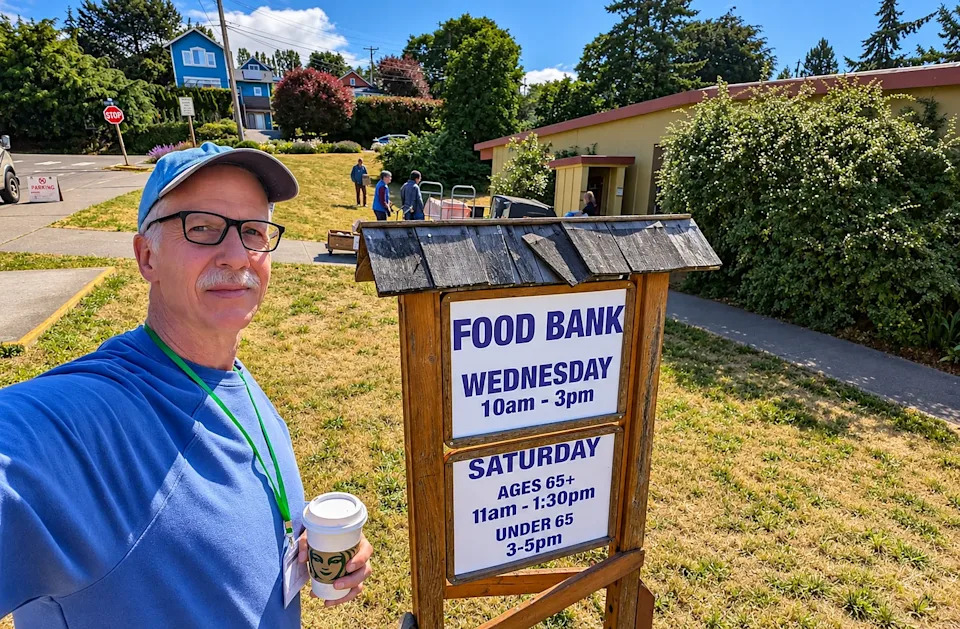
As the cost of living continues to climb across the United States, community support centers are experiencing a noticeable influx of families and individuals seeking basic nutritional assistance. At a local food pantry in Port Townsend, Washington, the weekly distribution floor is increasingly crowded with people striving to make ends meet. The daily interactions within the facility paint a starkly different picture of working-class struggles than the rhetoric recently popularized by prominent Silicon Valley executives.
Recent public discourse from tech leaders, including Elon Musk sharing memes labeling recipients of federal assistance as a "parasite class," stands in sharp contrast to the lived experiences of community volunteers. Frontline workers report that the individuals seeking grocery support demonstrate profound selflessness and restraint rather than exploitation. Instead of hoarding provisions, recipients regularly evaluate their own necessities against the needs of others in their community.
One illustrative case involved Cal, a disabled man in his sixties whose frail frame visibly demonstrated his hardship. When offered a container of peanut butter at the pantry station, he initially declined the item out of concern that a limited stock should be saved for households with young children. Only after receiving firm assurances that the warehouse had sufficient inventory did he agree to accept the staple alongside his regular allocation of tuna, rice, and tomato soup.
Over the course of six months and more than a thousand clients served, pantry volunteers have observed that excessive requests are an extreme anomaly. Among the diverse group of visitors—comprising large families, retired seniors living on fixed incomes, individuals with disabilities, and low-wage workers—only two people ever asked for more food than appeared reasonable. Furthermore, there is no evidence of recipients taking free provisions to resell them for personal profit.
Rather than trying to maximize their haul, visitors routinely express concern about depleting community supplies. Common refrains heard by distribution workers include questions about whether the pantry has enough food to go around, assertions that they do not wish to take more than their fair share, and explicit requests to reserve specialized items for families with children. In many instances, workers must actively persuade clients to accept additional nutritious items.
Community members also utilize their access to help neighbors who face mobility challenges or bureaucratic delays. One regular visitor named Janet, who manages a household of six, consistently collects extra groceries on behalf of disabled neighbors unable to travel to the facility. Another client gathered ingredients to prepare a massive batch of chili, explaining that he intended to share the cooked meals with his sister’s family, who had not yet completed their pantry registration.
The demographic makeup of food bank visitors also dispels common misconceptions regarding employment and dependency. A significant portion of recipients are actively employed but earn wages insufficient to keep up with rising consumer prices. Volunteers recount distributing staples to individuals they later encountered working shifts at local fast-food establishments, as well as assisting nursing home aides who arrive directly from exhausting overnight shifts to secure meals for their children.
The operational backbone of these distribution centers relies heavily on older community members, many of whom are retirees contributing intensive physical labor. These volunteers manage the arrival of large delivery trucks carrying farm produce, surplus items nearing expiration dates from commercial grocery stores, and shipments from regional redistribution hubs. Despite the heavy physical demands, these workers sustain the facility’s logistics without grievance.
Keeping a community food bank running involves an extensive list of operational demands beyond distributing food. Daily tasks require registering new households, placing coordinated orders with regional supply networks, recruiting and logging hours for volunteers, washing and preparing fresh produce, restocking shelves, managing waste, and breaking down endless piles of cardboard shipping containers. Notably, several of the volunteers participating in these daily chores are also clients who utilize the service themselves.
These ground-level realities highlight an ongoing debate surrounding the perspective of the nation's wealthiest business figures on systemic poverty. While some tech executives occasionally voice progressive sentiments—such as Jeff Bezos suggesting the bottom half of American earners should pay no federal income tax, or Mark Zuckerberg suggesting excessive billionaire wealth may be unwarranted—their proposed remedies often rely heavily on technological advancements such as artificial intelligence.
However, policy decisions tied to these figures have had immediate, tangible consequences for community relief efforts. Musk's DOGE initiative recently eliminated approximately $1 billion in federal funding from the United States Department of Agriculture, a program that directly allowed food banks to purchase fresh supplies from local agricultural producers. Concurrently, economic analysts and researchers have warned that unregulated artificial intelligence could worsen economic inequality rather than resolve widespread financial insecurity.
The broader critique of public assistance programs also contrasts sharply with the tax structures utilized by the ultra-wealthy. While figures like venture capitalist Peter Thiel frequently voice frustrations regarding high tax rates, investigative reporting from ProPublica reveals that billionaires typically pay between 3 and 10 percent of their true income in taxes when factoring in unsold stock gains, with the top twenty-five wealthiest Americans paying an estimated average rate of just 3.4 percent. For frontline workers and low-income families, these policy debates underscore a widening divide between corporate rhetoric and community survival.


(0)