
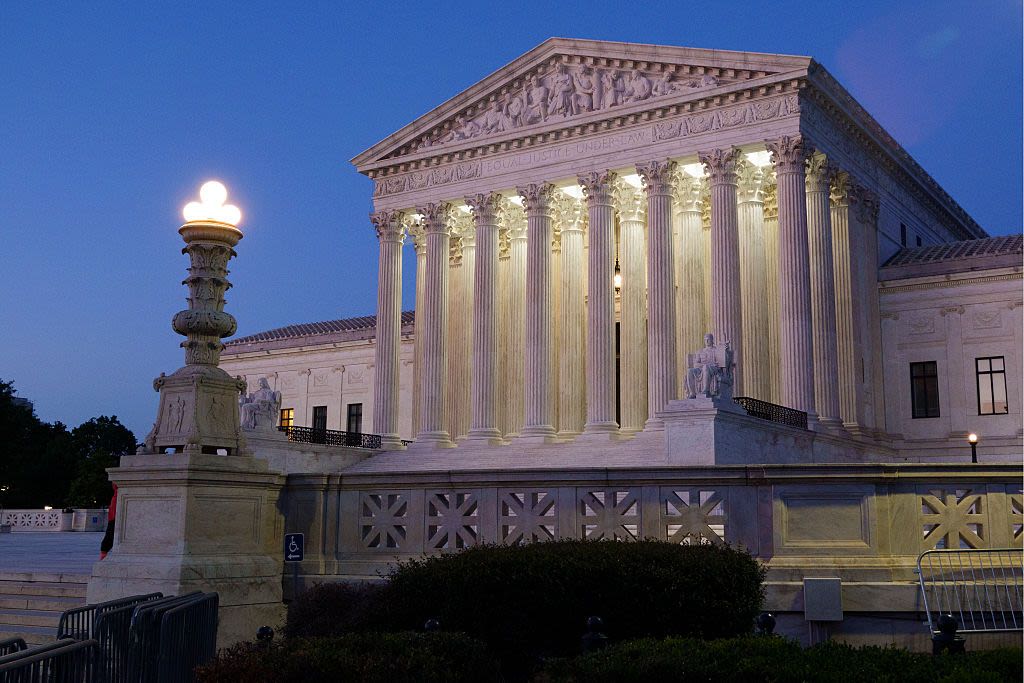
The Supreme Court has rejected an emergency request from the Trump administration seeking permission to implement key portions of a newly established U.S. Postal Service regulation governing mail-in ballots.
In a brief, unsigned order issued on Monday, the justices left intact a preliminary injunction handed down by a federal judge in Boston. The decision prevents the federal government from requiring states to comply with several contested mail-in voting requirements as the upcoming November midterm elections draw near.
Justice Brett Kavanaugh penned a one-paragraph concurring opinion outlining his agreement with the decision to deny the administration's stay request. While indicating that the Postal Service might possess the underlying statutory authority to issue rules of this nature, Kavanaugh underscored that practical electoral realities outweighed immediate implementation.
Specifically, Kavanaugh emphasized that state and local election officials simply do not have sufficient time to reasonably adapt to and execute the federal agency's mandates prior to the nationwide vote in November.
Justice Samuel Alito authored a dissent from the ruling, which was joined by Justice Clarence Thomas. Alito maintained that the Trump administration had satisfied the necessary criteria for an emergency stay, asserting that the government was likely to succeed on the legal merits and that the balance of equities leaned in its favor.
In his dissent, Alito challenged the viability of the lawsuit brought against the policy, stating that several plaintiffs lacked the legal standing required to sue. He further argued that the remaining claims rested on a legal argument that the high court had recently described as a long-shot effort that rarely succeeds.
The Supreme Court's ruling arrives at a critical juncture in the election calendar, with the midterm contests less than two months away. Preparations for mail voting are already actively underway across the country, with at least two states, North Carolina and Alabama, having already started mailing ballots out to registered voters.
The legal clash originates from an executive order signed by President Donald Trump in March. The measure was enacted as part of a wider administrative initiative aimed at addressing concerns regarding mail-in voting procedures and guarding against potential voter fraud.
Under the directives of the executive order, the Department of Homeland Security was tasked with providing each state with an official roster of adult U.S. citizens residing within its borders at least 60 days prior to a federal election. The order also instructed the U.S. attorney general to initiate investigations and criminal prosecutions against state election workers who permit non-eligible individuals to cast ballots.
Following the announcement of the executive order, a coalition of 23 states, led by California, alongside the District of Columbia, initiated a legal challenge in the U.S. District Court for the District of Massachusetts.
The challenging states argued that the administration's actions ran afoul of the U.S. Constitution. They asserted that constitutional provisions explicitly grant individual states the primary authority to determine voter qualifications and govern the times, places, and manner of conducting congressional elections.
U.S. District Judge Indira Talwani ruled in favor of the challenging states on June 25, entering an order that temporarily prohibited the federal government from implementing major components of the executive order within the plaintiff jurisdictions ahead of the November election.
The procedural trajectory shifted on August 24 when the Supreme Court temporarily froze Judge Talwani's initial injunction. In that previous determination, the majority concluded that the states had sued prematurely before the executive order had actually been enforced, meaning the plaintiffs had not demonstrated an active injury sufficient to sustain the suit.
Shortly after that Supreme Court action, the Postal Service officially issued new administrative regulations designed to carry out the executive order's directives. The new postal rules introduced several nationwide requirements, including specific standards for ballot envelope designs and the mandatory upload of state voter data into a designated USPS web portal.
Three days after the Supreme Court lifted the initial injunction, Judge Talwani issued a fresh order prohibiting the administration for 14 days from forcing states to follow the newly enacted Postal Service rules.
The administration quickly filed another emergency appeal with the Supreme Court, urging the justices to lift Judge Talwani's newest preliminary injunction and characterizing her legal conclusions as flawed. With the high court's latest refusal to grant a stay, the injunction barring enforcement of the USPS mail-in voting rules remains in place for the November elections.


(0)