
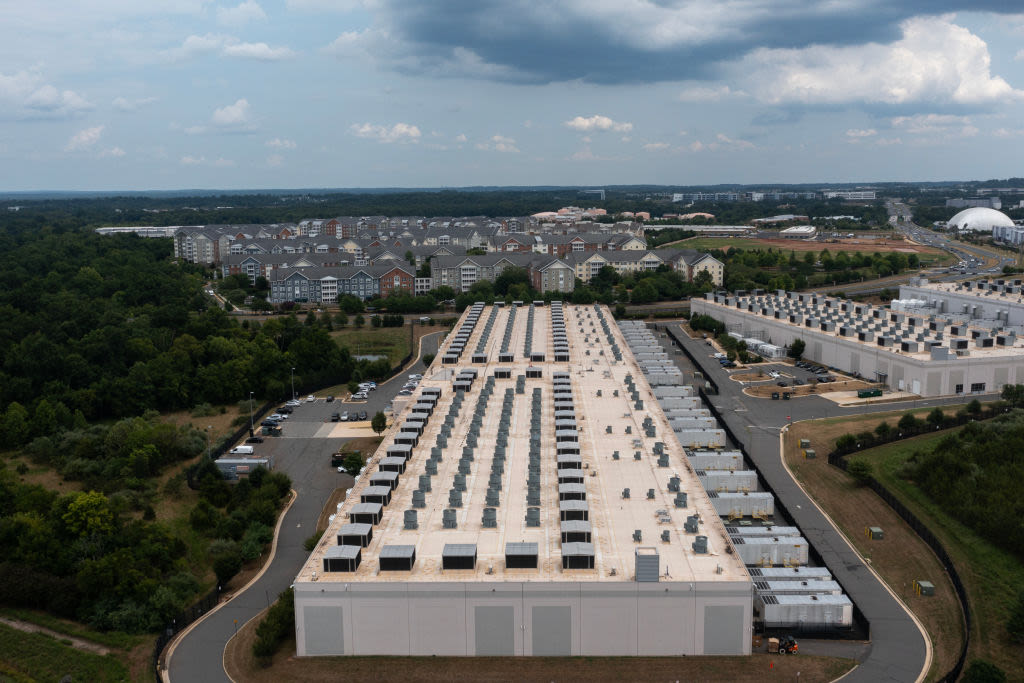
When voters across Ohio head to the polls on Election Day, residents in eighteen distinct municipalities and townships will confront decisive ballot initiatives concerning the regulation, limitation, and prohibition of energy-intensive data centers within their jurisdictions. The upcoming November 3 votes mark an unprecedented grassroots mobilization across the state, reflecting mounting anxiety over the rapid proliferation of high-tech infrastructure and its far-reaching consequences for local communities.
The wave of municipal ballot questions solidified following the September 4 statutory deadline for citizens to submit charter amendment petitions to their respective municipal councils. Under the constitutional framework governing Ohio's charter municipalities, registered electors hold the right to introduce amendment petitions at any point in the legislative cycle; however, stringent procedural guidelines dictate that if a regular election falls outside a window between 60 and 120 days from filing, local authorities must instead organize a special election.
Ohio has swiftly emerged as a primary national hub for technological infrastructure, currently ranking fourth among all states in the total quantity of operational data centers, according to an analysis published in April by the Pew Research Center. Attracted by regional resources, major technology conglomerates and commercial data developers have actively pursued dozens of new site developments throughout the state, frequently selecting suburban and rural environments for massive facility buildouts.
Among the jurisdictions slated to decide local ballot measures, at least fourteen of the eighteen communities are currently navigating active, formal proposals for brand-new data center installations. This concentration of commercial interest has fueled heightened scrutiny from local citizenries, who cite multifaceted anxieties that encompass rising electric utility bills, severe environmental impacts, and broader questions surrounding the rapid expansion of artificial intelligence.
In nine separate localities—specifically Conneaut, Defiance, Granville, Oregon, Pataskala, Piqua, Sunbury, Trenton, and Upper Sandusky—voters will weigh measures establishing a strict operational threshold that bans any data center requiring more than 25 megawatts of electrical energy per month. This standardized local policy reflects a coordinated strategy designed to curb the footprint of massive computational facilities.
The municipal 25-megawatt initiatives mirror a comprehensive constitutional amendment campaign spearheaded by the grassroots advocacy coalition Conserve Ohio. Although the organization was unable to meet the requisite July filing deadline to secure a statewide referendum on the ballot this year, leadership remains actively committed to positioning the constitutional measure before Ohio electors during the 2027 election cycle.
In public statements regarding their ongoing efforts, Conserve Ohio emphasized that the group is continuing to organize with numerous communities across Ohio to enact local data center bans and to establish local government structures that operate by the people and for the people. Organizers view municipal charter amendments as a direct mechanism for communities to assert local control while statewide petition efforts progress.
The intensity of citizen pushback is especially prominent in the city of Piqua, where activist Alisha Lange helped spearhead a sweeping petition campaign after years of friction with local elected leaders. Lange entered political activism in 2023, following the municipal approval of a battery plant that left her and nearby residents with long-term health issues. Subsequent appeals to elected officials representing Piqua, including U.S. Representative Mike Carey, yielded minimal success.
Frustrations in Piqua escalated dramatically when social media giant Meta unveiled blueprints for an expansive data facility slated to draw an estimated 1,400 megawatts of power. The sheer scale of the proposal galvanized local opposition, leading Lange and fellow residents to conclude that private administrative meetings were ineffective, prompting them to turn directly to citizen petitions and recall mechanisms.
In response to the Meta development, Piqua electors gathered sufficient signatures to trigger a recall petition seeking the removal of the city's mayor alongside two municipal commissioners. Simultaneously, organizers submitted two additional petitions designed to align the municipal signature requirements for recalls with Ohio state law and officially strike down a city agreement intended to supply power to the planned data complex.
Beyond the 25-megawatt cap, community sentiment in Piqua prompted organizers to pursue even more stringent measures. While circulating the standard regulatory petition, many residents expressed a desire to ban data centers entirely, resulting in an additional petition that successfully gathered enough signatures to qualify a complete prohibition for a standalone special election.
Reflecting on the petition drives, Lange noted that the signature-gathering process transformed into an unexpected catalyst for communal solidarity. She observed that although data center proposals have created friction in the community, the petition drives brought residents together in a shared fellowship, providing a venue for neighbors to voice mutual concerns and take collective action.
Variations in regulatory strategy are evident across several other municipalities where citizens tailored their ballot language to meet specific local demands. In Urbana, voters will decide on a proposed charter amendment establishing an aggressive 7.5-megawatt monthly power consumption limit for commercial server facilities, setting an even stricter ceiling than the 25-megawatt model.
Meanwhile, the city of Hubbard represents a unique case in the upcoming November election as the sole Ohio municipality with a ballot question proposing an absolute and complete ban on data centers, prohibiting all such facilities regardless of their megawatt capacity. The Hubbard measure underscores the varying degrees of resistance emerging as communities evaluate the industrialization of their local zoning districts.
In central Ohio, citizen activism has also expanded beyond tech-specific facilities to address heavy industrial development more broadly. Pleasant Township resident Jen Belt, who resides within two miles of a proposed data center in Grove City, assisted in organizing an initiative drive to ensure that any new heavy industrial project in Grove City requires community consent rather than limiting oversight strictly to computing facilities.
As the November election approaches, the outcome across these eighteen Ohio communities will provide a critical indicator of public sentiment toward large-scale technology developments in the region. The resulting votes will test the limits of municipal power, influence local energy allocations, and determine whether grassroots charter amendments can reshape the future of digital infrastructure across the state.





(0)