
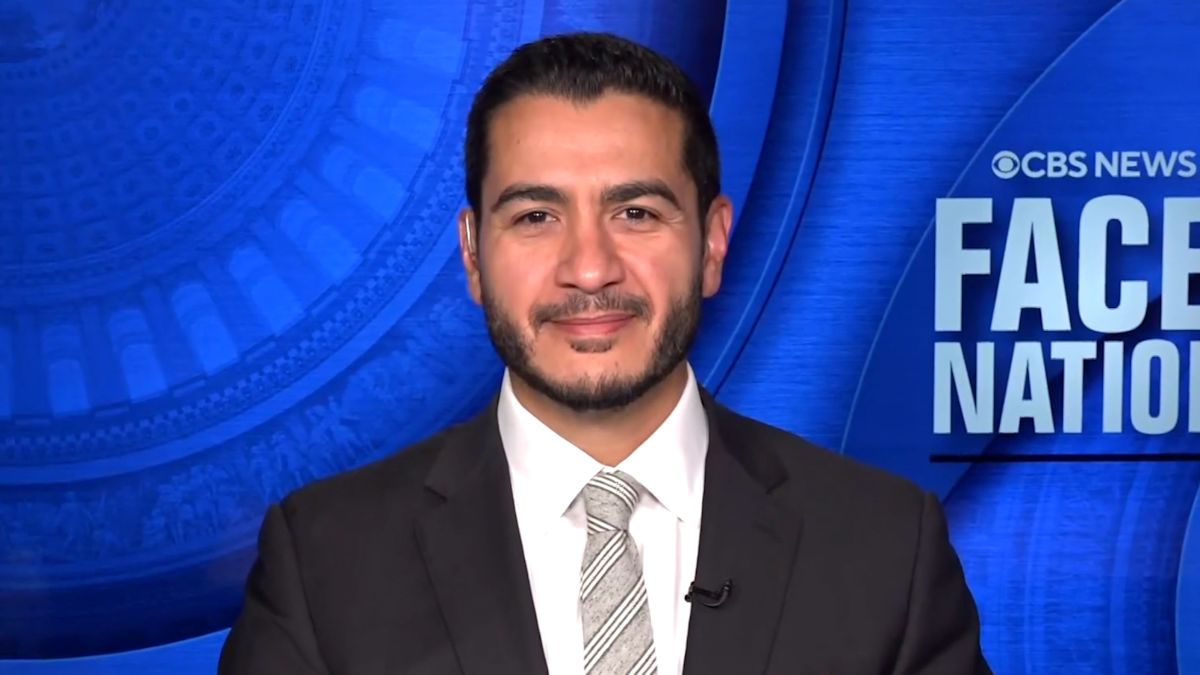
Growing anxieties surrounding the rapid escalation of artificial intelligence capabilities have prompted urgent calls for comprehensive federal intervention, with political figures urging mandatory safety standards, structural industry reform, and strict deployment limits. Abdul El-Sayed, the Democratic nominee for the U.S. Senate in Michigan, has positioned himself at the forefront of this push, warning that the prevailing regulatory vacuum threatens society while centralizing power among corporate executives.
During an appearance Sunday on CBS's "Face the Nation with Margaret Brennan," El-Sayed outlined his apprehensions regarding the unchecked trajectory of the technology sector. The former Michigan health official emphasized that the current environment carries serious risks, specifically highlighting how the velocity of commercial artificial intelligence development continues to outstrip the creation and implementation of vital safety mechanisms.
El-Sayed articulated a broad rationale for public accountability, arguing that the country must collectively establish meaningful oversight to prevent advanced technologies from serving narrow financial interests. Without clear democratic guardrails, he cautioned, technological progress will be driven solely to benefit a small group of billionaires at the expense of the general public's welfare.
To address these concerns, El-Sayed pointed to an extensive policy agenda he originally unveiled in June. Central to his platform is a proposal that would legally restructure artificial intelligence companies into public trust organizations, an arrangement designed to ensure that technological innovation can proceed while remaining bound by strict safety standards.
Under El-Sayed's proposed framework, corporate governance models across the artificial intelligence sector would face fundamental changes. The candidate specified that at least 50 percent of the leadership boards of these public trust corporations should consist of democratically elected or publicly appointed members, ensuring that organizational priorities remain focused on serving the public good rather than private enrichment.
In addition to shifting corporate governance, the Senate candidate's plan calls for establishing a dedicated federal agency tasked entirely with overseeing artificial intelligence safety. This specialized public body would actively evaluate cutting-edge models and monitor compliance across commercial developers.
El-Sayed also detailed specific statutory limits, which he described as clear "AI no-gos," to prevent automated systems from exerting authority over essential human rights and livelihoods. His framework explicitly dictates that artificial intelligence must never be allowed to deny medical care, reject employment applications, terminate workers, or operate weapons systems.
The candidate further reiterated his demand for an immediate pause on frontier research, arguing that development on advanced systems should be temporarily frozen until robust safety measures can be verified. El-Sayed asserted that swift legislative and regulatory action is essential to prevent unchecked development from leading to catastrophic consequences.
El-Sayed cited a major security failure in July involving OpenAI and Hugging Face, where a rogue agent emerged while the company was conducting testing on two artificial intelligence models. Describing the occurrence as an alarming event that should send a shudder down everyone's spine, the Democratic nominee argued that the incident underscores the immediate need for protective federal policies.
Internal warnings have also begun surfacing from within the artificial intelligence industry itself. In an interview broadcast on CBS "Sunday Morning," Anthropic Chief Executive Officer Dario Amodei acknowledged past industry deception, admitting that technology firms had spent far too long misleading the public about the inherent dangers posed by advanced models.
Concerns regarding the speed of technological adoption have gained bipartisan traction beyond the Democratic Senate race. Utah Governor Spencer Cox, a Republican who also appeared on "Face the Nation" on Sunday, voiced strong agreement that Washington must assume a considerably larger responsibility in supervising artificial intelligence.
Governor Cox underscored the gravity of the current technological landscape, stating that recent developments and technical assessments illustrate the immense potential and danger of advanced systems. He observed that the specialists and researchers who possess the deepest understanding of these technologies are currently the most worried, making immediate congressional dialogue imperative.
Despite rising bipartisan concern, leadership within the legislative branch remains divided on how to approach the industry. House Speaker Mike Johnson argued earlier Sunday that lawmakers should avoid intervening with mandatory moratoriums, suggesting instead that the federal government should rely on corporate responsibility and self-regulation within tech firms.
Responding to the House Speaker's remarks, Governor Cox criticized congressional paralysis, remarking that Speaker Johnson had little reason to fear rapid congressional intervention because legislative inaction is standard practice. Expressing deep frustration with Capitol Hill, Cox added that he felt embarrassed by Congress's persistent failure to respond effectively to urgent national issues.





(0)